| Introduction | | Search taxa | | Taxon tree | | Taxon match | | Checklist | | Literature | | Stats | | Photogallery | | OBIS Vocab | | Log in |
CaRMS taxon detailsMacoma balthica (Linnaeus, 1758)
141579 (urn:lsid:marinespecies.org:taxname:141579)
accepted
Species
Limecola balthica (Linnaeus, 1758) · unaccepted
marine,
(of ) Linnaeus, C. (1758). Systema Naturae per regna tria naturae, secundum classes, ordines, genera, species, cum characteribus, differentiis, synonymis, locis. Tomus I. Editio decima, reformata. Laurentii Salvii. Holmiae [Stockholm]. [iii] + 824 pp. , available online at https://biodiversitylibrary.org/page/726886
page(s): 677 [details] Available for editors 
Description A rather thick, broadly oval shell up to 30 mm long. The top of the shell is somewhere in the middle
of the shell. The...
Description A rather thick, broadly oval shell up to 30 mm long. The top of the shell is somewhere in the middle of the shell. The back is slightly acuminate. The shell surface is smooth with very fine concentric growth lines. Its colour varies: white, yellow, orange to reddish. They burrow shallowly in fine, muddy sand bottoms and feed on food particles located on top of the sediment that they manage to suck up by means of their very long, individually separated stretchable siphons. [details] Distribution M. balthica occurs from the upper part of the intertidal down to the shallow subtidal zone. In the study area it is...
Distribution M. balthica occurs from the upper part of the intertidal down to the shallow subtidal zone. In the study area it is confined to the Wadden Sea, the Delta estuaries and a narrow zone along the coast. It has not been recorded from depths over 25 m in the open North Sea. The highest biomasses are found along the Dutch coast and north of Ameland and Schiermonnikoog. [details] Distribution Macoma balthica typically occurs in the coastal zone of the Belgian part of the North Sea. In the 1976-1986 period only low...
Distribution Macoma balthica typically occurs in the coastal zone of the Belgian part of the North Sea. In the 1976-1986 period only low densities were observed (up to 10 ind./m2) whereas densities up to 170 ind./m2 were found in the 1994-2001 period. In this period the highest densities seemed to occur near the eastern coastal zone. [details] Distribution Arctic seas to off Georgia
Distribution Arctic seas to off Georgia [details]
MolluscaBase eds. (2021). MolluscaBase. Macoma balthica (Linnaeus, 1758). Accessed through: Nozères, C., Kennedy, M.K. (Eds.) (2021) Canadian Register of Marine Species at: http://www.marinespecies.org/carms/aphia.php?p=taxdetails&id=141579 on 2026-10-05
Nozères, C., Kennedy, M.K. (Eds.) (2026). Canadian Register of Marine Species. Macoma balthica (Linnaeus, 1758). Accessed at: https://www.marinespecies.org/CaRMS/aphia.php?p=taxdetails&id=141579 on 2026-10-05
Date action by
original description
(of ) Linnaeus, C. (1758). Systema Naturae per regna tria naturae, secundum classes, ordines, genera, species, cum characteribus, differentiis, synonymis, locis. Tomus I. Editio decima, reformata. Laurentii Salvii. Holmiae [Stockholm]. [iii] + 824 pp. , available online at https://biodiversitylibrary.org/page/726886
page(s): 677 [details] Available for editors context source (Schelde) Maris, T., O. Beauchard, S. Van Damme, E. Van den Bergh, S. Wijnhoven & P. Meire. (2013). Referentiematrices en Ecotoopoppervlaktes Annex bij de Evaluatiemethodiek Schelde-estuarium Studie naar “Ecotoopoppervlaktes en intactness index”. [Reference matrices and Ecotope areas Annex to the Evaluation methodology Scheldt estuary Study on “Ecotope areas and intactness index”. <em>Monitor Taskforce Publication Series, 2013-01. NIOZ: Yerseke.</em> 35 pp. (look up in IMIS) [details] basis of record Gofas, S.; Le Renard, J.; Bouchet, P. (2001). Mollusca. in: Costello, M.J. et al. (eds), European Register of Marine Species: a check-list of the marine species in Europe and a bibliography of guides to their identification. <em>Patrimoines Naturels.</em> 50: 180-213., available online at http://www.vliz.be/imisdocs/publications/ocrd/254404.pdf [details] additional source Abbott, R. T. (1974). <i>American seashells. The marine Mollusca of the Atlantic and Pacific coast of North America</i>. ed. 2. Van Nostrand, New York. 663 pp., 24 pls. [October 1974]. (look up in IMIS) [details] additional source Bachelet G. (1980). Growth and recruitment of the tellinid bivalve <i>Macoma balthica</i> at the southern limit of its geographical distribution, the Gironde estuary (SW France). <em>Marine Biology.</em> 59(2): 105–117., available online at https://doi.org/10.1007/bf00405460 [details] additional source Gilbert, M. A. (1978). Aspects of the reproductive cycle in <i>Macoma balthica</i> (Bivalvia). <em>The Nautilus.</em> 92(1): 21-24., available online at https://www.biodiversitylibrary.org/page/8273949 [details]  Present Inaccurate Introduced: alien Containing type locality Unreviewed
Biology M. balthica has separate sexes. The main breeding period lies between February and May, with a second spawning in autumn. The free-swimming veliger larva has a pelagic life of up to seven or eight weeks. When growth is fast, longevity is about three years, but in slow growing populations specimens live for six or seven years (Fish & Fish, 1989; Zwarts et al., 1992).
Description A rather thick, broadly oval shell up to 30 mm long. The top of the shell is somewhere in the middle of the shell. The back is slightly acuminate. The shell surface is smooth with very fine concentric growth lines. Its colour varies: white, yellow, orange to reddish. They burrow shallowly in fine, muddy sand bottoms and feed on food particles located on top of the sediment that they manage to suck up by means of their very long, individually separated stretchable siphons. [details] Dimensions reaches 1.5 to 3.5 cm in size [details] Distribution M. balthica occurs from the upper part of the intertidal down to the shallow subtidal zone. In the study area it is confined to the Wadden Sea, the Delta estuaries and a narrow zone along the coast. It has not been recorded from depths over 25 m in the open North Sea. The highest biomasses are found along the Dutch coast and north of Ameland and Schiermonnikoog. [details] Distribution Macoma balthica typically occurs in the coastal zone of the Belgian part of the North Sea. In the 1976-1986 period only low densities were observed (up to 10 ind./m2) whereas densities up to 170 ind./m2 were found in the 1994-2001 period. In this period the highest densities seemed to occur near the eastern coastal zone. [details] Distribution Arctic seas to off Georgia [details] Habitat Known from seamounts and knolls [details] Habitat M. balthica occurs in muddy sediments with a preference for relatively high silt-clay percentages. [details] Habitat intertidal, bathyal, infralittoral and circalittoral of the Gulf and estuary [details] Habitat Macoma balthica tends to prefer very fine sediments (median grain size < 200 μm) with high mud contents (> 20%). The maximum relative occurrence (80%!) is reached in sediments with a median grain size of 0-50 μm and a mud content of 50-60%. [details] Morphology M. balthica has a broadly oval shell, somewhat inflated anteriorly. lt is up to 25 mm in length. The shell surface is smooth, sculptured with very fine concentric lines. The growth stages are clearly visible, usually marked by bands of colour. lt is very variable in colour, with shades of white, yellow, pink or purple, often drawn out in concentric bands. The interior of the shell is white or purple, or a shade of the external colour (Tebble, 1966; Fish & Fish, 1989; Hayward & Ryland, 1990). [details] Reproduction separate sexes, usually not dimorphic in shell structure; fertilization occurs within the mantle cavity anf young hatch as pelagic larvae (generalized for group) [details] Spelling often spelled M. baltica [details]
BIOTIC
Encyclopedia of Marine Life of Britain and Ireland Marine Life Information Network - UK To Barcode of Life (135 barcodes) (from synonym Limecola balthica (Linnaeus, 1758)) To Barcode of Life (16 barcodes) To Biodiversity Heritage Library (176 publications) To Dyntaxa To European Nucleotide Archive, ENA (Macoma balthica) To GenBank (858 nucleotides; 933 proteins) To GenBank (858 nucleotides; 933 proteins) (from synonym Limecola balthica (Linnaeus, 1758)) To Global Biotic Interactions (GloBI) To Malacopics (Macoma balthica (Linnaeus, 1758) Canada, British Columbia, Vancouver, at 0.05-0.15 ... To Malacopics (Macoma balthica (Linnaeus, 1758) Finland, Satakunta, Pori, Yyteri, beached, collect... To Malacopics (Macoma balthica (Linnaeus, 1758) Netherlands, Friesland, Terschelling, beachmarker ... To Malacopics (Macoma balthica (Linnaeus, 1758) Netherlands, Friesland, Terschelling, beachmarker ... To Malacopics (Macoma balthica (Linnaeus, 1758) Netherlands, Zeeland, Domburg) To Marine Bivalves of the British Isles webpage at National Museum of Wales To PESI To USNM Invertebrate Zoology Mollusca Collection To ITIS Unreviewed
.jpg "To Malacopics (Macoma balthica (Linnaeus, 1758) Canada, British Columbia, Vancouver, at 0.05-0.15 ...")
Hosted externally
.jpg "To Malacopics (Macoma balthica (Linnaeus, 1758) Finland, Satakunta, Pori, Yyteri, beached, collect...")
Hosted externally
.jpg "To Malacopics (Macoma balthica (Linnaeus, 1758) Netherlands, Friesland, Terschelling, beachmarker ...")
Hosted externally

Hosted externally
.jpg "To Malacopics (Macoma balthica (Linnaeus, 1758) Netherlands, Zeeland, Domburg)")
Hosted externally
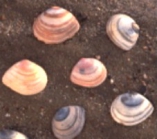 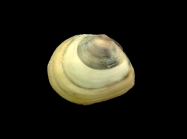 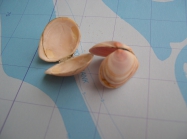 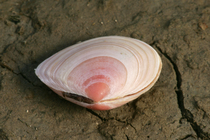 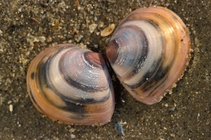 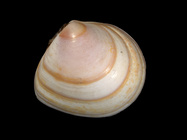 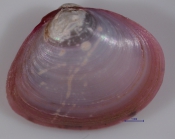 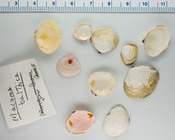 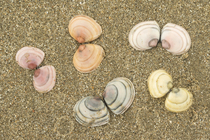
Image from synonym   |
