Foraminifera taxon details
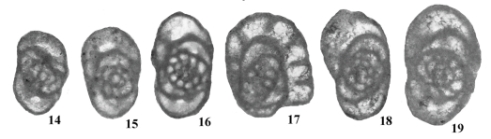
Praeostaffellina Cózar, Somerville & Burgess, 2008 †
1054857 (urn:lsid:marinespecies.org:taxname:1054857)
accepted
Genus
Praeostaffellina macdonaldensis Cózar, Somerville & Burgess, 2008 † (type by original designation)
marine, brackish, fresh, terrestrial
fossil only
feminine
Cózar, P.; Somerville, I. D.; Burgess, I. (2008). New foraminifers in the Visean/Serpukhovian boundary interval of the Lower Limestone Formation, Midland Valley, Scotland. <em>Journal of Paleontology.</em> 82(05): 906-923., available online at https://doi.org/10.1666/07-103.1
page(s): p. 916 [details] Available for editors [request]
page(s): p. 916 [details] Available for editors
[request]
Hayward, B.W.; Le Coze, F.; Vachard, D.; Gross, O. (2024). World Foraminifera Database. Praeostaffellina Cózar, Somerville & Burgess, 2008 †. Accessed at: https://www.marinespecies.org/foraminifera/aphia.php?p=taxdetails&id=1054857 on 2024-04-24
Date
action
by
original description
Cózar, P.; Somerville, I. D.; Burgess, I. (2008). New foraminifers in the Visean/Serpukhovian boundary interval of the Lower Limestone Formation, Midland Valley, Scotland. <em>Journal of Paleontology.</em> 82(05): 906-923., available online at https://doi.org/10.1666/07-103.1
page(s): p. 916 [details] Available for editors [request]
page(s): p. 916 [details] Available for editors
[request]