Scleractinia name details
Dimorphosmilia Tomes, 1901 †
1581374 (urn:lsid:marinespecies.org:taxname:1581374)
unaccepted > junior subjective synonym
Genus
Dimorphosmilia eboracensis Tomes, 1901 † accepted as Gonioseris eboracensis (Tomes, 1901) † (type by monotypy)
- Species Dimorphosmilia eboracensis Tomes, 1901 † accepted as Gonioseris eboracensis (Tomes, 1901) † (unaccepted > superseded combination, basionym)
marine, fresh, terrestrial
fossil only
Tomes, R. F. (1901). Contributions to a history of the Mesozoic corals of the County of York. <em>Proceedings of the Yorkshire Geological Society.</em> 14(1): 72-85. [details] 
Description The description given thereafter is the description of the colonial stage (see Gonioseris for the younger ontogenic...
Status Dimorphosmilia is considered as the developed astogenic stage of Gonioseris. Consequently, in terms of nomenclature, we...
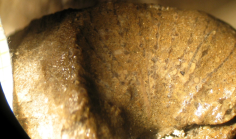
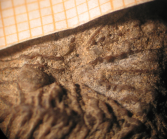
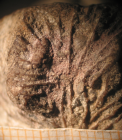
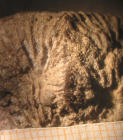
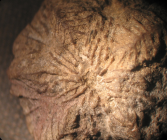
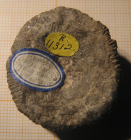
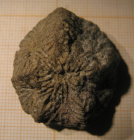
Description The description given thereafter is the description of the colonial stage (see Gonioseris for the younger ontogenic stages). Colonial meandroid corallum with short radial valleys and elevated collines arranged according to a hexagonal or pentagonal plan around a central mouth. Epitheca fully or partially covering costae. Radial elements are compact free, unequal, straight or slightly curved costosepta. Lateral faces ornamented with opposite carinae. No pali. Microstructure unknown but the ornamentation of septa suggest a montlivaltid microstructure. Endotheca present with dissepiments. Central zone of corallites occupied by a wide fossa, synapticulae absent, The wall common to the colony is an intercostal paratheca covered by an epitheca. It is by no mean homologous to the wall between valleys issued from S1 of the young stage. [details]
Status Dimorphosmilia is considered as the developed astogenic stage of Gonioseris. Consequently, in terms of nomenclature, we...
Status Dimorphosmilia is considered as the developed astogenic stage of Gonioseris. Consequently, in terms of nomenclature, we consider Dimorphosmilia Tomes 1901 as a junior synonym of Gonioseris Duncan 1872. [details]
Hoeksema, B. W.; Cairns, S. (2025). World List of Scleractinia. Dimorphosmilia Tomes, 1901 †. Accessed at: https://www.marinespecies.org/scleractinia/aphia.php?p=taxdetails&id=1581374 on 2026-10-03
Date
action
by
original description
Tomes, R. F. (1901). Contributions to a history of the Mesozoic corals of the County of York. <em>Proceedings of the Yorkshire Geological Society.</em> 14(1): 72-85. [details]
basis of record Cairns, S.D., R. Baron-Szabo, A.F. Budd, B. Lathuilière, E. Roniewicz, J. Stolarski & K.G. Johnson. (2010). Corallosphere. , available online at http://www.corallosphere.org [details]
additional source Alloiteau J. (1957). Contribution à la systématique des Madréporaires fossiles. <em>Centre National de la Recherche Scientifique, Paris.</em> pp 462. [details]
additional source Fromentel E. de. (1857). Description des Polypiers fossiles de l'étage Nèocomien. <em>Bulletin de la Société des Sciences Historiques et Naturelles de l'Yonne, Auxerre (Perriquet et Rouillé).</em> 78 pp. [details]
 Present Inaccurate Introduced: alien Containing type locality
From editor or global species database
Description The description given thereafter is the description of the colonial stage (see Gonioseris for the younger ontogenic stages). Colonial meandroid corallum with short radial valleys and elevated collines arranged according to a hexagonal or pentagonal plan around a central mouth. Epitheca fully or partially covering costae. Radial elements are compact free, unequal, straight or slightly curved costosepta. Lateral faces ornamented with opposite carinae. No pali. Microstructure unknown but the ornamentation of septa suggest a montlivaltid microstructure. Endotheca present with dissepiments. Central zone of corallites occupied by a wide fossa, synapticulae absent, The wall common to the colony is an intercostal paratheca covered by an epitheca. It is by no mean homologous to the wall between valleys issued from S1 of the young stage. [details]Remark There are some lines of evidence to admit Gonioseris as a young stage of Dimorphosmilia. 1. They come both from the same outcrop (Cloughton Wyke) and up to now from nowhere else. 2. S1 from Gonioseris, already remarked for their strange angular anastomoses, become walls between valleys in Dimorphosmilia. 3. As already established by Duncan (1872) for Gonioseris and by Tomes (1901) for Dimorphosmilia both show symmetry 5 and 6 when symmetry 5 is exceptional in Scleractinia. 4. The dimensions of corallum are compatible. 5. The other dimensions are compatible. 6. The Montlivaltid structure of septa is also shared between both genera. 7. The difference in the lower surface can be explained. The costae of Gonioseris with their nice anastomosing pattern are still present in Dimorphosmilia but fully or partially covered by an epitheca. Both show the lower concavity. This suggest that the mobility was probably possible in the young stage but certainly less efficient in the "adult" stage. One nominal species is known [details]
Status Dimorphosmilia is considered as the developed astogenic stage of Gonioseris. Consequently, in terms of nomenclature, we consider Dimorphosmilia Tomes 1901 as a junior synonym of Gonioseris Duncan 1872. [details]
From editor or global species database