Foraminifera taxon details
Ammonia Brünnich, 1771
112078 (urn:lsid:marinespecies.org:taxname:112078)
accepted
Genus
Nautilus beccarii Linnaeus, 1758 accepted as Ammonia beccarii (Linnaeus, 1758) (type by subsequent designation)
Challengerella Billman, Hottinger & Oesterle, 1980 · unaccepted (Type species DNA sequence places...)
Type species DNA sequence places this in Ammonia clade - Hayward et al 2021
Hammonia Soldani, 1789 · unaccepted (Opinion of Loeblich & Tappan,...)
Opinion of Loeblich & Tappan, 1987 err. emend.
Pseudohelenina Collins, 1974 · unaccepted (subjective junior synonym in...)
subjective junior synonym in opinion of Hayward et al. (2021)
Rolshausenia Bermúdez, 1952 · unaccepted (Opinion of Loeblich & Tappan, 1987)
Rotalia (Turbinuline) · unaccepted (name not available. ICZN Art. 11...)
name not available. ICZN Art. 11 (b)(i): 11 (g): vernacular
Strebloides Bermúdez & Seiglie, 1963 · unaccepted (Molecular studies show that the...)
Molecular studies show that the type species is Ammonia T7 (Hayward et al., 2004)
Streblus Fischer de Waldheim, 1817 · unaccepted (Objective junior synonym,...)
Objective junior synonym, Loeblich & Tappan (1987)
Turbinulina Risso, 1826 · unaccepted (Opinion of Hayward et al (2021))
- Species Ammonia aberdoveyensis Haynes, 1973
- Species Ammonia abramovichae Hayward & Holzmann, 2021 in Hayward et al., 2021
- Species Ammonia acuta Al-Abawi, 1973 †
- Species Ammonia advena (Cushman, 1922)
- Species Ammonia akitaae Hayward, Frenzel & Holzmann, 2021 in Hayward et al., 2021
- Species Ammonia alia (Subbotina, 1960) †
- Species Ammonia altispira Qiu & Lin, 1978 †
- Species Ammonia ammoniformis (d'Orbigny, 1826) †
- Species Ammonia aomoriensis (Asano, 1951) †
- Species Ammonia aoteana (Finlay, 1940)
- Species Ammonia arabica Kaushik, 2021 in Hayward et al., 2021
- Species Ammonia ariakensis Akimoto, 2002
- Species Ammonia atjehensis (van der Vlerk, 1924) †
- Species Ammonia baganensis (LeRoy, 1939) †
- Species Ammonia batava (Hofker, 1951)
- Species Ammonia beccarii (Linnaeus, 1758)
- Species Ammonia bellaria Schönfeld, Beccari, Schmidt & Spezzaferri, 2021
- Species Ammonia bifurcata van Hinte, 1963 †
- Species Ammonia bradyi (Billman, Hottinger & Oesterle, 1980)
- Species Ammonia buzasi Hayward & Holzmann, 2021 in Hayward et al., 2021
- Species Ammonia caspica Shchedrina in Mayer, 1968
- Species Ammonia collinsi (Parr, 1932)
- Species Ammonia compressa (Voloshinova In Myatlyuk, 1953) †
- Species Ammonia confertitesta Zheng, 1978
- Species Ammonia convexa (Collins, 1958)
- Species Ammonia convexidorsa Zheng, 1978
- Species Ammonia corallinarum (d'Orbigny in Deshayes, 1832)
- Species Ammonia debenayi Hayward & Holzmann, 2019
- Species Ammonia decorata Golik, 1977
- Species Ammonia differens McCulloch, 1977
- Species Ammonia dilucida Shchedrina, 1984
- Species Ammonia dominicana (Bermúdez, 1949) †
- Species Ammonia fajemilai Hayward & Holzmann, 2021 in Hayward et al., 2021
- Species Ammonia falsobeccarii (Rouvillois, 1974)
- Species Ammonia galiciana (Putrya, 1964) †
- Species Ammonia gigantica (LeRoy, 1939) †
- Species Ammonia glans Shchedrina, 1984
- Species Ammonia globosa (van Voorthuysen, 1950) †
- Species Ammonia globula (Colom, 1936) †
- Species Ammonia goldsteinae Hayward & Holzmann, 2021 in Hayward et al., 2021
- Species Ammonia goodayi Hayward & Holzmann, 2021 in Hayward et al., 2021
- Species Ammonia granulosa (Putrya, 1964) †
- Species Ammonia haigi Hayward & Holzmann, 2021 in Hayward et al., 2021
- Species Ammonia hatatatensis (Takayanagi, 1952) †
- Species Ammonia hattai Hayward & Holzmann, 2021 in Hayward et al., 2021
- Species Ammonia heterogenea (Shchedrina, 1984)
- Species Ammonia honghaensis Nguyen Ngoc, 2006 †
- Species Ammonia honyaensis (Asano, 1953) †
- Species Ammonia hozanensis (Nakamura, 1937) †
- Species Ammonia icenica (Ten Dam & Reinhold, 1941) †
- Species Ammonia ikebei (Inoue & Nakeseko, 1951) †
- Species Ammonia improcera Kacharava, 1977 †
- Species Ammonia inflata (Seguenza, 1862) †
- Species Ammonia irridescens (Arnal, 1958)
- Species Ammonia italica (d'Orbigny, 1826) †
- Species Ammonia jacksoni Buzas, Smith & Beem, 1977
- Species Ammonia japonica (Hada, 1931)
- Species Ammonia jorisseni Hayward, Holzmann & Renjaan, 2021 in Hayward et al., 2021
- Species Ammonia justinparkeri Hayward & Holzmann, 2021 in Hayward et al., 2021
- Species Ammonia karadagica (Dolgopolskaya & Pauli, 1931)
- Species Ammonia ketienziensis (Ishizaki, 1943)
- Species Ammonia kitazatoi Hayward & Holzmann, 2021 in Hayward et al., 2021
- Species Ammonia koeboeensis (LeRoy, 1939) †
- Species Ammonia laevis (d'Orbigny in Fornasini, 1906) †
- Species Ammonia lucida (Madsen, 1895) †
- Species Ammonia maculosa Belford, 1966 †
- Species Ammonia marajoara (Petri, 1954) †
- Species Ammonia maruhasii (Kuwano, 1950) †
- Species Ammonia mendesi (Petri, 1955) †
- Species Ammonia mineacea (Bermudez, 1949) †
- Species Ammonia morleyae Hayward & Holzmann, 2021 in Hayward et al., 2021
- Species Ammonia moroensis Hofker, 1978
- Species Ammonia nakamurai (Ishizaki, 1948) †
- Species Ammonia nanus (Hornibrook, 1961) †
- Species Ammonia nativa Konenkova, 1989 †
- Species Ammonia neobeccarii Shchedrina & Mayer, 1975
- Species Ammonia ornata (Cushman, 1918) † (accepted > unreplaced junior homonym, Primary junior homonym of Rotalia ornata Ehrenberg, 1840)
- Species Ammonia parasovica Shchedrina & Mayer, 1975
- Species Ammonia parkinsoniana (d'Orbigny, 1839)
- Species Ammonia pauciloculata (Phleger & Parker, 1951)
- Species Ammonia paucipora Zheng, 1979
- Species Ammonia pawlowskii Hayward & Holzmann, 2019
- Species Ammonia pila Billman, Hottinger & Oesterle, 1980 †
- Species Ammonia pliocenica (Ten Dam & Reinhold, 1941) †
- Species Ammonia praebeccarii Poignant, 1999 †
- Species Ammonia praeinflata Abaw, 1989 †
- Species Ammonia pseudobeccarii (Putrya, 1964) †
- Species Ammonia pseudotepida (van Voorthuysen, 1950) †
- Species Ammonia punctatogranosa (Seguenza, 1880) †
- Species Ammonia reyi (Marie, 1952) †
- Species Ammonia ripleyensis (Berry, 1929) †
- Species Ammonia rolshauseni (Cushman & Bermúdez, 1946)
- Species Ammonia rugulosa Parker, 2009
- Species Ammonia sadoensis (Asano, 1951) †
- Species Ammonia sandakanensis Ujiié, 1977 †
- Species Ammonia shchedrinae Hayward & Holzmann, 2021 in Hayward et al., 2021
- Species Ammonia shutoi Ujiié, 1977 †
- Species Ammonia sikokuensis (Ishizaki, 1948) †
- Species Ammonia sillaensis Kim, 1965 †
- Species Ammonia sobrina (Shupack, 1934)
- Species Ammonia supera Belford, 1966 †
- Species Ammonia tepida (Cushman, 1926)
- Species Ammonia texana (Applin, Ellisor & Kniker, 1925) †
- Species Ammonia togopiensis Whittaker & Hodgkinson, 1979 †
- Species Ammonia tosaensis (Ishizaki, 1948) †
- Species Ammonia turgida (Hofker, 1951)
- Species Ammonia umbonata (Le Roy, 1944) † (accepted > unreplaced junior homonym, Primary junior homonym of Rotalia soldanii var. umbonata Silvestri, 1898)
- Species Ammonia venecpeyreae Hayward & Holzmann, 2019
- Species Ammonia veneta (Schultze, 1854)
- Species Ammonia viennensis (d'Orbigny, 1846) †
- Species Ammonia voorthuyseni (Hofker, 1958) †
- Species Ammonia aeris (Setzer, 1975) † accepted as Pseudoeponides aeris Setzer, 1975 †
- Species Ammonia agoiensis Yanko, 1990 accepted as Ammonia neobeccarii Shchedrina & Mayer, 1975 (Subjective junior synonym in opinion of Hayward et al (2021))
- Species Ammonia angulata (Kuwano, 1950) accepted as Ammonia ketienziensis (Ishizaki, 1943) (subjective junior synonym in opinion of Hayward et al. (2021))
- Species Ammonia annectens (Parker & Jones, 1865) accepted as Rotalidium annectens (Parker & Jones, 1865)
- Species Ammonia batavus (Hofker, 1951) accepted as Ammonia batava (Hofker, 1951) (superseded combination)
- Species Ammonia calcar (d'Orbigny, 1826) accepted as Neorotalia calcar (d'Orbigny in Deshayes, 1830) (Incorrect authority)
- Species Ammonia capetownensis McCulloch, 1977 accepted as Pararotalia capetownensis (McCulloch, 1977) accepted as Pararotalia armata (d'Orbigny in Parker, Jones & Brady, 1865) (subjective junior synonym in opinion of Hayward pers obs (2020))
- Species Ammonia caucasica Yanko, 1990 accepted as Ammonia karadagica (Dolgopolskaya & Pauli, 1931) (subjective junior synonym in opinion of Hayward et al. (2021))
- Species Ammonia compacta (Hofker, 1964) accepted as Ammonia batava subsp. compacta (Hofker, 1964) accepted as Ammonia batava (Hofker, 1951) (In opinion of Hayward et al. (2019))
- Species Ammonia compressa (Zheng, 1978) accepted as Pseudoeponides compressum Zheng, 1978 accepted as Pseudoeponides anderseni Warren, 1957
- Species Ammonia compressiuscula (Brady, 1884) accepted as Rotalinoides compressiuscula (Brady, 1884)
- Species Ammonia crebera Shchedrina, 1984 accepted as Ammonia crebra Shchedrina, 1984 accepted as Ammonia confertitesta Zheng, 1978 (Incorrect original spelling, the feminine of "creber" = "thick, close, pressed together, frequent, numerous, repeated" is "crebra" not "crebera")
- Species Ammonia crebra Shchedrina, 1984 accepted as Ammonia confertitesta Zheng, 1978 (subjective junior synonym in opinion of Hayward et al. (2021))
- Species Ammonia dentata (Parker & Jones, 1865) accepted as Asterorotalia dentata (Parker & Jones, 1865)
- Species Ammonia equatoriana (LeRoy, 1941) accepted as Pseudoeponides equatoriana (LeRoy, 1941) accepted as Pseudoeponides equatorianus (LeRoy, 1941)
- Species Ammonia erinacea (Heron-Allen & Earland, 1915) accepted as Murrayinella globosa (Millet, 1903)
- Species Ammonia faceta He, Hu & Wang, 1965 † accepted as Pseudoeponides japonicus Uchio in Kawai et al., 1950 † (This was proposed as a replacement name for Pseudoeponides japonicus when Pseudoeponides was placed in synonymy of Ammonia and this A. japonica was a secondary homonym.)
- Species Ammonia formosa Shchedrina, 1984 accepted as Ammonia confertitesta Zheng, 1978 (subjective junior synonym in opinion of Hayward et al. (2021))
- Species Ammonia gaimardi (d'Orbigny in Fornasini, 1906) accepted as Rotalinoides gaimardi (d'Orbigny in Fornasini, 1906)
- Species Ammonia globosa (Millett, 1903) accepted as Murrayinella globosa (Millet, 1903)
- Species Ammonia heterogeneus (Shchedrina, 1984) accepted as Ammonia heterogenea (Shchedrina, 1984) (unaccepted > incorrect grammatical agreement of specific epithet)
- Species Ammonia juliae McCulloch, 1981 accepted as Ammonia turgida (Hofker, 1951) (subjective junior synonym in opinion of Hayward et al. (2021))
- Species Ammonia lalibertadensis McCulloch, 1977 accepted as Ammonia decorata Golik, 1977 (subjective junior synonym in opinion of Hayward et al. (2021))
- Species Ammonia langeri Hayward & Holzmann, 2019 accepted as Pseudoeponides langeri (Hayward & Holzmann, 2019) (In opinion of Hayward et al. (2021))
- Species Ammonia lassis (Setzer, 1975) † accepted as Pseudoeponides lassis Setzer, 1975 †
- Species Ammonia limbatobeccarii (McLean, 1956) † accepted as Ammonia sobrina (Shupack, 1934) (subjective junior synonym in opinion of Hayward et al. (2021))
- Species Ammonia limnetes (Todd & Brönnimann, 1957) accepted as Ammonia advena (Cushman, 1922) (subjective junior synonym in opinion of Hayward et al. (2021))
- Species Ammonia medialis (Setzer, 1975) † accepted as Pseudoeponides medialis Setzer, 1975 †
- Species Ammonia nakazatoensis (Kuwano, 1950) † accepted as Pseudoeponides nakazatoensis (Kuwano, 1950) †
- Species Ammonia nipponica (Asano, 1936) accepted as Pararotalia nipponica (Asano, 1936) (Majority use places this taxon in Pararotalia rather than Ammonia.)
- Species Ammonia orbicularis (d'Orbigny, 1826) accepted as Discorbis orbicularis (d'Orbigny, 1850) † (Incorrect authority)
- Species Ammonia papillosa (Brady, 1884) accepted as Rotalinoides gaimardi (d'Orbigny in Fornasini, 1906)
- Species Ammonia parkensoniana (d'Orbigny, 1839) accepted as Ammonia parkinsoniana (d'Orbigny, 1839) (misspelling of 'parkinsoniana')
- Species Ammonia penangensis McCulloch, 1977 accepted as Pseudorotalia penangensis (McCulloch, 1977) (In opinion of B Hayward (pers. obs, 2019))
- Species Ammonia perlucida (Heron-Allen & Earland, 1913) accepted as Aubignyna perlucida (Heron-Allen & Earland, 1913)
- Species Ammonia propingua (Reuss, 1856) † accepted as Buccella propingua (Reuss, 1856) † (Opinion of Rupp and Haunold-Jenke (2003))
- Species Ammonia pseudotepida (Ujiie, 1992) accepted as Ammonia paucipora Zheng, 1979 (subjective junior synonym in opinion of Hayward et al. (2021); Secondary homonym of Ammonia pseudotepida (van Voorhusen, 1950))
- Species Ammonia pustulosa (Albani & Barbero, 1982) accepted as Buccella pustulosa Albani & Barbero, 1982 (DNA sequencing of NZ specimens shows this is NOT an Ammonia and clusters with other Buccella, as originally described. (pers. comm. BW Hayward 2018).)
- Species Ammonia rupta Lei & Li, 2016 accepted as Ammonia ketienziensis (Ishizaki, 1943) (subjective junior synonym in opinion of Hayward et al. (2021))
- Species Ammonia schroeteriana (Parker & Jones, 1862) accepted as Pseudorotalia schroeteriana (Parker & Jones in Carpenter, 1862)
- Species Ammonia shanghaiensis McCulloch, 1977 accepted as Pseudorotalia shanghaiensis (McCulloch, 1977) (In opinion of B Hayward (pers. obs, 2019))
- Species Ammonia takanabensis (Ishizaki, 1943) accepted as Ammonia ketienziensis (Ishizaki, 1943) (subjective junior synonym in opinion of Hayward et al. (2021))
- Species Ammonia tanabensis Uchio, 1962 (unaccepted > nomen nudum)
- Species Ammonia venosa (Fichtel & Moll, 1798) accepted as Operculinella venosa (Fichtel & Moll, 1798) accepted as Nummulites venosus (Fichtel & Moll, 1798)
- Species Ammonia whittakeri (Bhatia, 1985) accepted as Helenina whittakeri (Bhatia, 1985) accepted as Pseudoeponides anderseni Warren, 1957 (Opinion of Hayward (pers. comm. 2017))
- Species Ammonia angulata (Shchedrina, 1984) (uncertain > taxon inquirendum, Secondary junior homonym of Ammonia angulata (Kuwano, 1950))
- Species Ammonia asanoi (Uchio, 1951) (uncertain > taxon inquirendum, In opinion of Hayward et al. (2021))
- Species Ammonia astera Shchedrina, 1984 (uncertain > taxon inquirendum, In opinion of Hayward et al. (2021))
- Species Ammonia avalonensis (Natland, 1950) (uncertain > taxon inquirendum)
- Species Ammonia bulloides (d'Orbigny in Fornasini, 1906) (uncertain > taxon inquirendum, Figures and description insufficient to identify taxon)
- Species Ammonia catesbyana (d'Orbigny, 1839) (uncertain > taxon inquirendum, In opinion of Hayward et al. (2021))
- Species Ammonia cristobalensis McCulloch, 1981 (uncertain > taxon inquirendum, In opinion of Hayward et al. (2021))
- Species Ammonia flevensis (Hofker, 1930) (uncertain > taxon inquirendum, In opinion of Hayward et al. (2021))
- Species Ammonia gaudichaudi (d'Orbigny in Fornasini, 1906) (uncertain > taxon inquirendum, In opinion of Hayward et al. (2021))
- Species Ammonia granuloumbilica Zheng, 1978 (uncertain > taxon inquirendum, In opinion of Hayward et al. (2021))
- Species Ammonia inflata (d'Orbigny in Fornasini, 1902) † (uncertain > taxon inquirendum, Junior homonym of Ammonia inflata (Seguenza, 1862))
- Species Ammonia kawachiensis (Chiji, 1956) (uncertain > taxon inquirendum, In opinion of Hayward et al. (2021))
- Species Ammonia maremini (d'Orbigny in Fornasini, 1902) (uncertain > taxon inquirendum, In opinion of Hayward et al. (2021))
- Species Ammonia multicella Zheng, 1978 (uncertain > taxon inquirendum, In opinion of Hayward et al. (2021))
- Species Ammonia nantongensis He, Hu & Wang, 1965 (uncertain > taxon inquirendum, In opinion of Hayward et al. (2021))
- Species Ammonia novoeuxinica Yanko in Yanko & Troitskaya, 1987 (uncertain > taxon inquirendum, In opinion of Hayward et al. (2021))
- Species Ammonia pauperata (Parr, 1941) (uncertain > taxon inquirendum, In opinion of Hayward et al. (2021))
- Species Ammonia penangensis McCulloch, 1981 (uncertain > taxon inquirendum, In opinion of Hayward et al. (2021))
- Species Ammonia umbilicata (d'Orbigny in Fornasini, 1902) (uncertain > taxon inquirendum, In opinion of Hayward et al. (2021))
marine, brackish, fresh, terrestrial
recent + fossil
feminine
Brünnich, M.T. (1771–1772). <i>Zoologiae fundamenta praelectionibus Academicis accomodata</i>. Hafniae et Lipsiae. 253 [+ 1] pp. , available online at https://www.biodiversitylibrary.org/page/29565699
page(s): p. 232 [details]
page(s): p. 232 [details]
Hayward, B.W.; Le Coze, F.; Vachard, D.; Gross, O. (2024). World Foraminifera Database. Ammonia Brünnich, 1771. Accessed at: https://www.marinespecies.org/foraminifera/aphia.php?p=taxdetails&id=112078 on 2024-09-25
Date
action
by
original description
Brünnich, M.T. (1771–1772). <i>Zoologiae fundamenta praelectionibus Academicis accomodata</i>. Hafniae et Lipsiae. 253 [+ 1] pp. , available online at https://www.biodiversitylibrary.org/page/29565699
page(s): p. 232 [details]
original description (of Strebloides Bermúdez & Seiglie, 1963) Bermúdez, P. J.; Seiglie, G. A. (1963). Estudio sistemático de los foraminíferos del Golfo de Cariaco (Venezuela). <em>Bol. Inst. Ocean., U.D.O., Cumaná.</em> 2(2): 1-267.
page(s): p. 166 [details] Available for editors [request]
original description (of Streblus Fischer de Waldheim, 1817) Fischer de Waldheim, G. (1817). Adversaria Zoologica. <em>Mémoires de Ia Société Impériale des Naturalistes de Moscou.</em> 5: 357-471., available online at https://www.biodiversitylibrary.org/page/10128982
page(s): p. 449 [details]
original description (of Rotalia (Turbinuline)) Orbigny, A. D. d'. (1826). Tableau méthodique de la classe des Céphalopodes. <em>Annales des Sciences Naturelles.</em> vol. 7: 96-169, 245-314., available online at http://biodiversitylibrary.org/page/5753959
page(s): p. 275 [details]
original description (of Challengerella Billman, Hottinger & Oesterle, 1980) Billman, H.; Hottinger, L.; Oesterle, H. (1980). Neogene to Recent rotaliid foraminifera from the Indopacific Ocean; their canal system, their classification and their stratigraphic use. <em>Schweizerische paläontologische abhandlungen.</em> 101: 71-113.
page(s): p. 81 [details]
original description (of Pseudohelenina Collins, 1974) Collins, A. C. (1974). Port Phillip Survey 1957–63 Foraminiferida. <em>Memoirs of the National Museum of Victoria.</em> 35: 1-61., available online at https://biodiversitylibrary.org/page/39053549 [details] Available for editors [request]
original description (of Turbinulina Risso, 1826) Risso, A. (1826-1827). Histoire naturelle des principales productions de l'Europe Méridionale et particulièrement de celles des environs de Nice et des Alpes Maritimes. <em>[book series].</em> 400 pp., 13 pls. [volumes 1-5. Paris, F.G. Levrault. vol. 3. Mammifères. Oiseaux. Poissons / vol. 4. Mollusques. Annélides / vol. 5. Crustacés. Myriapodes, scorpionides, arachnides et acarides. Insectes. Vers intestinaux. Radiaires. Zoophytes]., available online at http://www.biodiversitylibrary.org/bibliography/58984
page(s): vol. 4 p. 18 [details]
original description (of Hammonia Soldani, 1789) Soldani A. 1789-1798. Testaceographiae ac zoophytographiae parvae et microscopiae. Tomus primus (1789), pp. i-xxxii, 1-289; pl. pl. 1-179; Tomus secundus (1798), pp. i-vii, 1-148; 1-26, and appendix pl. I-XXIII [reproduced from <i>Saggio orittografico</i>, 1780]. Senis [Sienna], Francisco Rossi., available online at http://gdz.sub.uni-goettingen.de/dms/load/toc/?PPN=PPN572634544
page(s): p. 56 [details]
original description (of Rolshausenia Bermúdez, 1952) Bermúdez, P. J. (1952). Estudio sistematico de los Foraminiferos rotaliformes. <em>Venezuela Minist. Minas and Hidrocarb. Boletin de geologia.</em> 2(4): 1-230., available online at https://drive.google.com/file/d/1uDKihn3kXx4yoDw6mEYicsoslxwt-Mue/view
page(s): p. 63 [details] Available for editors [request]
basis of record Gross, O. (2001). Foraminifera, <B><I>in</I></B>: Costello, M.J. <i>et al.</i> (Ed.) (2001). <i>European register of marine species: a check-list of the marine species in Europe and a bibliography of guides to their identification. Collection Patrimoines Naturels,</i> 50: pp. 60-75 (look up in IMIS) [details]
additional source Loeblich, A. R.; Tappan, H. (1987). Foraminiferal Genera and their Classification. Van Nostrand Reinhold Company, New York. 970pp., available online at https://books.google.pt/books?id=n_BqCQAAQBAJ [details] Available for editors [request]
additional source Hayward, B. W.; Holzmann, M.; Grenfell, H. R.; Pawlowski, J.; Triggs, C. M. (2004). Morphological distinction of molecular types in Ammonia - towards a taxonomic revision of the world's most commonly misidentified foraminifera. <em>Marine Micropaleontology.</em> 50: 237-271. [details] Available for editors [request]
page(s): p. 232 [details]
original description (of Strebloides Bermúdez & Seiglie, 1963) Bermúdez, P. J.; Seiglie, G. A. (1963). Estudio sistemático de los foraminíferos del Golfo de Cariaco (Venezuela). <em>Bol. Inst. Ocean., U.D.O., Cumaná.</em> 2(2): 1-267.
page(s): p. 166 [details] Available for editors
[request] original description (of Streblus Fischer de Waldheim, 1817) Fischer de Waldheim, G. (1817). Adversaria Zoologica. <em>Mémoires de Ia Société Impériale des Naturalistes de Moscou.</em> 5: 357-471., available online at https://www.biodiversitylibrary.org/page/10128982
page(s): p. 449 [details]
original description (of Rotalia (Turbinuline)) Orbigny, A. D. d'. (1826). Tableau méthodique de la classe des Céphalopodes. <em>Annales des Sciences Naturelles.</em> vol. 7: 96-169, 245-314., available online at http://biodiversitylibrary.org/page/5753959
page(s): p. 275 [details]
original description (of Challengerella Billman, Hottinger & Oesterle, 1980) Billman, H.; Hottinger, L.; Oesterle, H. (1980). Neogene to Recent rotaliid foraminifera from the Indopacific Ocean; their canal system, their classification and their stratigraphic use. <em>Schweizerische paläontologische abhandlungen.</em> 101: 71-113.
page(s): p. 81 [details]
original description (of Pseudohelenina Collins, 1974) Collins, A. C. (1974). Port Phillip Survey 1957–63 Foraminiferida. <em>Memoirs of the National Museum of Victoria.</em> 35: 1-61., available online at https://biodiversitylibrary.org/page/39053549 [details] Available for editors
[request] original description (of Turbinulina Risso, 1826) Risso, A. (1826-1827). Histoire naturelle des principales productions de l'Europe Méridionale et particulièrement de celles des environs de Nice et des Alpes Maritimes. <em>[book series].</em> 400 pp., 13 pls. [volumes 1-5. Paris, F.G. Levrault. vol. 3. Mammifères. Oiseaux. Poissons / vol. 4. Mollusques. Annélides / vol. 5. Crustacés. Myriapodes, scorpionides, arachnides et acarides. Insectes. Vers intestinaux. Radiaires. Zoophytes]., available online at http://www.biodiversitylibrary.org/bibliography/58984
page(s): vol. 4 p. 18 [details]
original description (of Hammonia Soldani, 1789) Soldani A. 1789-1798. Testaceographiae ac zoophytographiae parvae et microscopiae. Tomus primus (1789), pp. i-xxxii, 1-289; pl. pl. 1-179; Tomus secundus (1798), pp. i-vii, 1-148; 1-26, and appendix pl. I-XXIII [reproduced from <i>Saggio orittografico</i>, 1780]. Senis [Sienna], Francisco Rossi., available online at http://gdz.sub.uni-goettingen.de/dms/load/toc/?PPN=PPN572634544
page(s): p. 56 [details]
original description (of Rolshausenia Bermúdez, 1952) Bermúdez, P. J. (1952). Estudio sistematico de los Foraminiferos rotaliformes. <em>Venezuela Minist. Minas and Hidrocarb. Boletin de geologia.</em> 2(4): 1-230., available online at https://drive.google.com/file/d/1uDKihn3kXx4yoDw6mEYicsoslxwt-Mue/view
page(s): p. 63 [details] Available for editors
[request] basis of record Gross, O. (2001). Foraminifera, <B><I>in</I></B>: Costello, M.J. <i>et al.</i> (Ed.) (2001). <i>European register of marine species: a check-list of the marine species in Europe and a bibliography of guides to their identification. Collection Patrimoines Naturels,</i> 50: pp. 60-75 (look up in IMIS) [details]
additional source Loeblich, A. R.; Tappan, H. (1987). Foraminiferal Genera and their Classification. Van Nostrand Reinhold Company, New York. 970pp., available online at https://books.google.pt/books?id=n_BqCQAAQBAJ [details] Available for editors
[request] additional source Hayward, B. W.; Holzmann, M.; Grenfell, H. R.; Pawlowski, J.; Triggs, C. M. (2004). Morphological distinction of molecular types in Ammonia - towards a taxonomic revision of the world's most commonly misidentified foraminifera. <em>Marine Micropaleontology.</em> 50: 237-271. [details] Available for editors
[request]  Present Inaccurate Introduced: alien Containing type locality
From editor or global species database
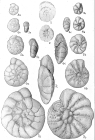
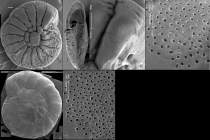
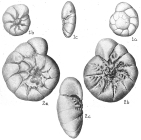
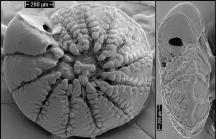
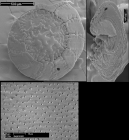
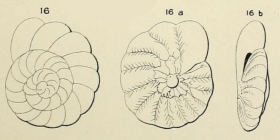
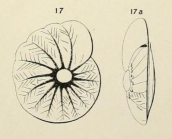
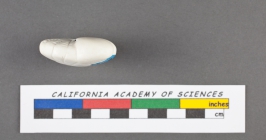
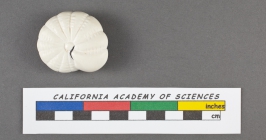
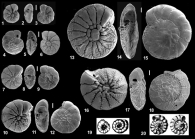
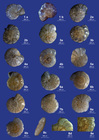
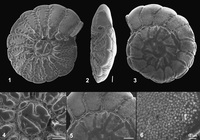
Diagnosis Test biconvex, with low trochospiral coil of 3 to 4 volutions, spiral side evolute, umbilical side involute and may have large umbilical plug surrounded by umbilical fissure, final whorl with deeply incised umbilical, radial, and intraseptal spaces, sutural fissures straight or branching and appear feathered on the umbilical side, umbilical and intraseptal spaces of earlier whorls filled by secondary lamellae, leaving only one vertical passage from each chamber of the penultimate whorl to the junction of the umbilical fissure and intraseptal space of the final whorl, early chambers closed toward umbilicus, no spiral canal present, periphery rounded to carinate; wall calcareous, optically radial, primarily bilamellar, moderately coarsely perforate, both surfaces may be ornamented by pillars and umbilical side may have transverse ridges resulting from the feathered umbilical sutures when these are present; primary aperture an interiomarginal extraumbilical arch, bordered by a protruding lip at the umbilical end, space between the lip and umbilical pillars may be filled by secondary lamellae as new chambers form. L. Miocene to Holocene; cosmopolitan. (Loeblich & Tappan, 1987, Foraminiferal Genera and Their Classification) [details]Diagnosis Fgdre [details]

To European Nucleotide Archive, ENA (Ammonia)
To European Nucleotide Archive, ENA (Streblus) (from synonym Streblus Fischer de Waldheim, 1817)
To Genbank
To Genbank (from synonym Streblus Fischer de Waldheim, 1817)
To ITIS
To European Nucleotide Archive, ENA (Streblus) (from synonym Streblus Fischer de Waldheim, 1817)
To Genbank
To Genbank (from synonym Streblus Fischer de Waldheim, 1817)
To ITIS
From editor or global species database