Deep-Sea taxon details
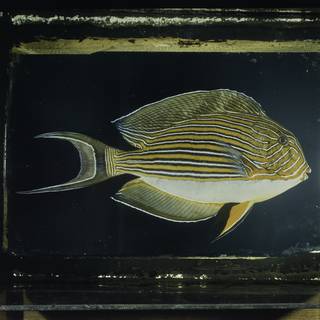
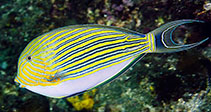
Acanthurus lineatus (Linnaeus, 1758)
159582 (urn:lsid:marinespecies.org:taxname:159582)
accepted
Species
marine, brackish, fresh, terrestrial
(of ) Linnaeus, C. (1758). Systema Naturae per regna tria naturae, secundum classes, ordines, genera, species, cum characteribus, differentiis, synonymis, locis. <em>Editio decima, reformata [10th revised edition], vol. 1: 824 pp. Laurentius Salvius: Holmiae.</em> , available online at https://biodiversitylibrary.org/page/726886 [details] Available for editors 
Description A territorial species (Ref. 167) which is common in surge zones of exposed seaward reefs of less than 3 m. The large males...
Distribution Indo-Pacific: eastern Africa to the Hawaiian, Marquesan and Tuamotu islands, north to southern Japan, south to the Great...
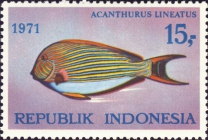
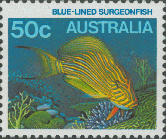
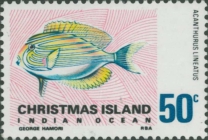
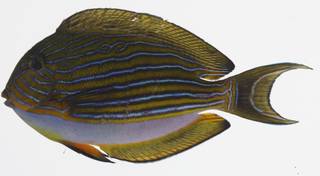
Description A territorial species (Ref. 167) which is common in surge zones of exposed seaward reefs of less than 3 m. The large males control well-defined feeding territories and harems of females (Ref. 1602). The species is almost continually in motion. Herbivorous but also feeds on crustaceans (Ref. 5503). The venomous caudal spine can cause painful wounds. [details]
Distribution Indo-Pacific: eastern Africa to the Hawaiian, Marquesan and Tuamotu islands, north to southern Japan, south to the Great...
Distribution Indo-Pacific: eastern Africa to the Hawaiian, Marquesan and Tuamotu islands, north to southern Japan, south to the Great Barrier Reef and New Caledonia; throughout Micronesia; replaced by the closely related A. sohal in the Red Sea [details]
Froese, R. and D. Pauly. Editors. (2024). FishBase. Acanthurus lineatus (Linnaeus, 1758). Accessed through: Glover, A.G.; Higgs, N.; Horton, T. (2024) World Register of Deep-Sea species (WoRDSS) at: https://www.marinespecies.org/deepsea/aphia.php?p=taxdetails&id=159582 on 2024-04-27
Glover, A.G.; Higgs, N.; Horton, T. (2024). World Register of Deep-Sea species (WoRDSS). Acanthurus lineatus (Linnaeus, 1758). Accessed at: https://marinespecies.org/deepsea/aphia.php?p=taxdetails&id=159582 on 2024-04-27
original description
(of ) Linnaeus, C. (1758). Systema Naturae per regna tria naturae, secundum classes, ordines, genera, species, cum characteribus, differentiis, synonymis, locis. <em>Editio decima, reformata [10th revised edition], vol. 1: 824 pp. Laurentius Salvius: Holmiae.</em> , available online at https://biodiversitylibrary.org/page/726886 [details] Available for editors
context source (Deepsea) Intergovernmental Oceanographic Commission (IOC) of UNESCO. The Ocean Biogeographic Information System (OBIS), available online at http://www.iobis.org/ [details]
additional source Froese, R. & D. Pauly (Editors). (2023). FishBase. World Wide Web electronic publication. version (02/2023)., available online at https://www.fishbase.org [details]
additional source Liu, J.Y. [Ruiyu] (ed.). (2008). Checklist of marine biota of China seas. <em>China Science Press.</em> 1267 pp. (look up in IMIS) [details] Available for editors
ecology source Looby, A.; Erbe, C.; Bravo, S.; Cox, K.; Davies, H. L.; Di Iorio, L.; Jézéquel, Y.; Juanes, F.; Martin, C. W.; Mooney, T. A.; Radford, C.; Reynolds, L. K.; Rice, A. N.; Riera, A.; Rountree, R.; Spriel, B.; Stanley, J.; Vela, S.; Parsons, M. J. G. (2023). Global inventory of species categorized by known underwater sonifery. <em>Scientific Data.</em> 10(1). (look up in IMIS), available online at https://doi.org/10.1038/s41597-023-02745-4 [details]
context source (Deepsea) Intergovernmental Oceanographic Commission (IOC) of UNESCO. The Ocean Biogeographic Information System (OBIS), available online at http://www.iobis.org/ [details]
additional source Froese, R. & D. Pauly (Editors). (2023). FishBase. World Wide Web electronic publication. version (02/2023)., available online at https://www.fishbase.org [details]
additional source Liu, J.Y. [Ruiyu] (ed.). (2008). Checklist of marine biota of China seas. <em>China Science Press.</em> 1267 pp. (look up in IMIS) [details] Available for editors
ecology source Looby, A.; Erbe, C.; Bravo, S.; Cox, K.; Davies, H. L.; Di Iorio, L.; Jézéquel, Y.; Juanes, F.; Martin, C. W.; Mooney, T. A.; Radford, C.; Reynolds, L. K.; Rice, A. N.; Riera, A.; Rountree, R.; Spriel, B.; Stanley, J.; Vela, S.; Parsons, M. J. G. (2023). Global inventory of species categorized by known underwater sonifery. <em>Scientific Data.</em> 10(1). (look up in IMIS), available online at https://doi.org/10.1038/s41597-023-02745-4 [details]
 Present Inaccurate Introduced: alien Containing type locality
From other sources
Description A territorial species (Ref. 167) which is common in surge zones of exposed seaward reefs of less than 3 m. The large males control well-defined feeding territories and harems of females (Ref. 1602). The species is almost continually in motion. Herbivorous but also feeds on crustaceans (Ref. 5503). The venomous caudal spine can cause painful wounds. [details]Diet Herbivorous but also feeds on crustaceans [details]
Distribution Indo-Pacific: eastern Africa to the Hawaiian, Marquesan and Tuamotu islands, north to southern Japan, south to the Great Barrier Reef and New Caledonia; throughout Micronesia; replaced by the closely related A. sohal in the Red Sea [details]
Habitat A territorial species which is common in surge zones of exposed seaward reefs. [details]
Habitat nektonic [details]
Importance Social- Commercial, fishery, aquarium [details]
Reproduction Form spawning aggregations [details]
To Barcode of Life (85 barcodes)
To Biodiversity Heritage Library (58 publications)
To Biological Information System for Marine Life (BISMaL)
To Digital Atlas Of Marine Species & Locations, DAMSL (Striped Surgeonfish)
To Digital Atlas Of Marine Species & Locations, DAMSL (Striped surgeonfish)
To European Nucleotide Archive (ENA)
To FishBase
To FishBase images (Acanthurus lineatus, Indonesia, by Greenfield, J.)
To GenBank (140 nucleotides; 144 proteins)
To Global Biotic Interactions (GloBI)
To IUCN Red List (Least Concern)
To NMNH Extant Collection (Acanthurus lineatus BUS 03-31 photograph lateral view)
To NMNH Extant Collection (Acanthurus lineatus FIN026026 Slide 120 mm)
To ITIS
To Biodiversity Heritage Library (58 publications)
To Biological Information System for Marine Life (BISMaL)
To Digital Atlas Of Marine Species & Locations, DAMSL (Striped Surgeonfish)
To Digital Atlas Of Marine Species & Locations, DAMSL (Striped surgeonfish)
To European Nucleotide Archive (ENA)
To FishBase
To FishBase images (Acanthurus lineatus, Indonesia, by Greenfield, J.)
To GenBank (140 nucleotides; 144 proteins)
To Global Biotic Interactions (GloBI)
To IUCN Red List (Least Concern)
To NMNH Extant Collection (Acanthurus lineatus BUS 03-31 photograph lateral view)
To NMNH Extant Collection (Acanthurus lineatus FIN026026 Slide 120 mm)
To ITIS