Foraminifera taxon details
Tauridiopsis Vachard in Krainer, Vachard & Schaffhauser, 2019 †
1397924 (urn:lsid:marinespecies.org:taxname:1397924)
accepted
Genus
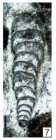
Tauridiopsis venusta Vachard in Krainer, Vachard & Schaffhauser, 2019 † (type by original designation)
- Species Tauridiopsis guangxiensis (Lin, Li & Sun, 1990) †
- Species Tauridiopsis kahlerorum Vachard in Krainer, Vachard & Schaffhauser, 2019 †
- Species Tauridiopsis kamaensis (Baryshnikov, 1982) †
- Species Tauridiopsis longa (Baryshnikov, 1982) †
- Species Tauridiopsis nudiseptata (Gaillot & Vachard, 2007) †
- Species Tauridiopsis planocamerata (Sosnina, 1978) †
- Species Tauridiopsis venusta Vachard in Krainer, Vachard & Schaffhauser, 2019 †
marine, brackish, fresh, terrestrial
fossil only
feminine
Krainer, K.; Vachard, D.; Schaffhauser, M. (2019). Early Permian (Yakhtashian; Artinskian - Early Kungurian) foraminifers and microproblematica from the Carnic Alps. <em>Abhandlungen der Geologischen Bundesanstalt.</em> 73:1-247., available online at https://opac.geologie.ac.at/wwwopacx/wwwopac.ashx?command=getcontent&server=images&value=Abh_0073.pdf
page(s): p. 111 [details] Available for editors
[request]
page(s): p. 111 [details] Available for editors
Original description Diagnosis: Test uniseriate, medium to large sized, similar to Nodosinelloides, i.e., bilayered, but the fibrous layer is...
Original description Diagnosis: Test uniseriate, medium to large sized, similar to Nodosinelloides, i.e., bilayered, but the fibrous layer is lacking on the roof of the chambers. Globular to geinitzinoid-shaped chambers. Aperture terminal simple.
Remarks: Tauridiopsis n. gen. differs from Tauridia Sellier de Civrieux & Dess auvagie, 1965 by the bilayered wall, the oblong shape of the chambers and the rarely conspicuous aperture. It differs from Nodosinelloides by the larger size, larger chambers, some irregularities in the shape of the chambers and in the axis of uniseriality; and from Protonodosaria by rarely conspicuous apertures, well-developed bilayered wall, and chambers more irregular in shape.
Occurrence: Latest Pennsylvanian, Early–Late Permian: Paleotethys, Neotethys, and New Mexico. [details]
Remarks: Tauridiopsis n. gen. differs from Tauridia Sellier de Civrieux & Dess auvagie, 1965 by the bilayered wall, the oblong shape of the chambers and the rarely conspicuous aperture. It differs from Nodosinelloides by the larger size, larger chambers, some irregularities in the shape of the chambers and in the axis of uniseriality; and from Protonodosaria by rarely conspicuous apertures, well-developed bilayered wall, and chambers more irregular in shape.
Occurrence: Latest Pennsylvanian, Early–Late Permian: Paleotethys, Neotethys, and New Mexico. [details]
Hayward, B.W.; Le Coze, F.; Vachard, D.; Gross, O. (2025). World Foraminifera Database. Tauridiopsis Vachard in Krainer, Vachard & Schaffhauser, 2019 †. Accessed at: https://www.marinespecies.org/Foraminifera/aphia.php?p=taxdetails&id=1397924 on 2026-04-17
Date
action
by
original description
Krainer, K.; Vachard, D.; Schaffhauser, M. (2019). Early Permian (Yakhtashian; Artinskian - Early Kungurian) foraminifers and microproblematica from the Carnic Alps. <em>Abhandlungen der Geologischen Bundesanstalt.</em> 73:1-247., available online at https://opac.geologie.ac.at/wwwopacx/wwwopac.ashx?command=getcontent&server=images&value=Abh_0073.pdf
page(s): p. 111 [details] Available for editors
[request]
page(s): p. 111 [details] Available for editors
From editor or global species database
Original description Diagnosis: Test uniseriate, medium to large sized, similar to Nodosinelloides, i.e., bilayered, but the fibrous layer is lacking on the roof of the chambers. Globular to geinitzinoid-shaped chambers. Aperture terminal simple.Remarks: Tauridiopsis n. gen. differs from Tauridia Sellier de Civrieux & Dess auvagie, 1965 by the bilayered wall, the oblong shape of the chambers and the rarely conspicuous aperture. It differs from Nodosinelloides by the larger size, larger chambers, some irregularities in the shape of the chambers and in the axis of uniseriality; and from Protonodosaria by rarely conspicuous apertures, well-developed bilayered wall, and chambers more irregular in shape.
Occurrence: Latest Pennsylvanian, Early–Late Permian: Paleotethys, Neotethys, and New Mexico. [details]