WoRDSS banner


Deep-Sea name details

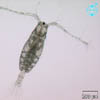
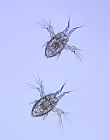
Acartia clausi Giesbrecht, 1889
104251  (urn:lsid:marinespecies.org:taxname:104251)

alternative representation
Species
marine, brackish, fresh, terrestrial
Giesbrecht, W. (1892 - 1893). Systematik und Faunistik der pelagischen Copepoden des Golfes von Neapel und der angrenzenden Meeres-Abschnitte. Systematics and faunistics of the pelagic copepods of the Gulf of Naples and the adjacent marine areas. <em>Fauna und Flora des Golfes von Neapel und der Angrenzenden Meeres-Abschnitte, Herausgegeben von der Zoologischen Station zu Neapel.</em> 19:1-831, pls. 1-54. [published in sections over 2 years, 1892-1893]., available online at https://www.biodiversitylibrary.org/page/798364 [details] OpenAccess publication
Distribution Gulf of St. Lawrence (unspecified region), upstream and downstream part of middle St. Lawrence estuary, lower St. Lawrence...  
Distribution Gulf of St. Lawrence (unspecified region), upstream and downstream part of middle St. Lawrence estuary, lower St. Lawrence estuary, Prince Edward Island (from the northern tip of Miscou Island, N.B. to Cape Breton Island south of Cheticamp, including the Northumberland Strait and Georges Bay to the Canso Strait causeway), upper Laurentian Channel (bathyal zone off Sept- Iles), middle North Shore (from Sept- Iles to Cape Whittle, including the Mingan Islands), Laurentian Channel (bathyal zone) to the northeast of Anticosti Island (=Jacques Cartier Strait), northern slope of Anticosti Island; western slope of Newfoundland, including the southern part of the Strait of Belle Isle but excluding the upper 50m in the area southwest of Newfoundland  [details]
Walter, T.C.; Boxshall, G. (2025). World of Copepods Database. Acartia clausi Giesbrecht, 1889. Accessed through: Glover, A.G.; Higgs, N.; Horton, T. (2025) World Register of Deep-Sea species (WoRDSS) at: https://www.marinespecies.org/deepsea/aphia.php?p=taxdetails&id=104251 on 2026-04-07
Glover, A.G.; Higgs, N.; Horton, T. (2026). World Register of Deep-Sea species (WoRDSS). Acartia clausi Giesbrecht, 1889. Accessed at: https://www.marinespecies.org/deepsea/aphia.php?p=taxdetails&id=104251 on 2026-04-07
Date
action
by
2004-12-21 15:54:05Z
created
2006-09-28 17:15:06Z
changed
2010-06-30 11:19:04Z
checked
2019-10-06 10:25:33Z
changed
2020-05-28 16:04:57Z
changed
2024-09-30 16:51:07Z
changed
2025-05-14 10:16:43Z
changed

original description Giesbrecht, W. (1892 - 1893). Systematik und Faunistik der pelagischen Copepoden des Golfes von Neapel und der angrenzenden Meeres-Abschnitte. Systematics and faunistics of the pelagic copepods of the Gulf of Naples and the adjacent marine areas. <em>Fauna und Flora des Golfes von Neapel und der Angrenzenden Meeres-Abschnitte, Herausgegeben von der Zoologischen Station zu Neapel.</em> 19:1-831, pls. 1-54. [published in sections over 2 years, 1892-1893]., available online at https://www.biodiversitylibrary.org/page/798364 [details] OpenAccess publication

context source (Deepsea) Intergovernmental Oceanographic Commission (IOC) of UNESCO. The Ocean Biogeographic Information System (OBIS), available online at http://www.iobis.org/ [details] 

context source (Bermuda) Wilson, C. B. (1936). Plankton of the Bermuda Oceanographic Expeditions IV. Notes on Copepoda . Zoologica Scientific Contributions of the New York Zoological Society , New York, 21(7): 89-93, available online at https://doi.org/10.5962/p.203698 [details] Available for editors  PDF available

basis of record Boxshall, G. (2001). Copepoda (excl. Harpacticoida), <B><I>in</I></B>: Costello, M.J. <i>et al.</i> (Ed.) (2001). <i>European register of marine species: a check-list of the marine species in Europe and a bibliography of guides to their identification. Collection Patrimoines Naturels,</i> 50: pp. 252-268 (look up in IMIS) [details] 

additional source Brunel, P., L. Bosse & G. Lamarche. (1998). Catalogue of the marine invertebrates of the estuary and Gulf of St. Lawrence. <em>Canadian Special Publication of Fisheries and Aquatic Sciences, 126.</em> 405 pp. (look up in IMIS) [details] Available for editors  PDF available

additional source Muller, Y. (2004). Faune et flore du littoral du Nord, du Pas-de-Calais et de la Belgique: inventaire. [Coastal fauna and flora of the Nord, Pas-de-Calais and Belgium: inventory]. <em>Commission Régionale de Biologie Région Nord Pas-de-Calais: France.</em> 307 pp., available online at http://www.vliz.be/imisdocs/publications/145561.pdf [details] 

additional source Alcaraz, M. (1980). Niche width and overlap of two coexisting species of Acartia (Copepoda: Calanoida), in the ria of Vigo (NW of Spain). ICES CM 1980/L:16: 1-5. [details] Available for editors  PDF available

additional source Eisfeld, S.J. & B. Niehoff. (2007). Gonad morphology, oocyte development and spawning cycle of the calanoid copepod Acartia clausi. Helgoland Marine Research 61(3):193-201., available online at https://doi.org/10.1007/s10152-007-0066-7 [details] Available for editors  PDF available

additional source Würzberg, L. (2006). The seasonal variation of the reproductive success of Acartia clausi (Copepoda) in the German Bight: Do diatom blooms have a negative influence? Diploma Thesis, University of Hamburg, Hamburg, Germany. [details] 

additional source Alcaraz, M. (1977). Ecología, competencia y segregación en especies congenéricas de copépodos (Acartia). [Ecology, competition and segregation of congeneric species of copepods (Acartia).]. <em>Doctoral Thesis, University of Barcelona, Spain.</em> 191 pp. [details] Available for editors  PDF available

additional source Moraitou-Apostolopoulou, M. & G. Verriopoulos. (1982). Toxicity of chromium to the marine planktonic copepod Acartia clausi, Giesbrecht. <em>Hydrobiologia.</em> 96(2):121-127, fig. 1, tabs. 1-3. (15-x-1982)., available online at https://doi.org/10.1007/BF02185427 [details] Available for editors  PDF available

additional source Moraitou-Apostolopoulou, M. & G. Verriopoulos. (1982). Egg laying in two populations of Acartia clausi exposed to different degrees of pollution. <em>Vie et Milieu.</em> 31(1):65-69. (v-1982, French summary.) [for 1981]. [details] Available for editors  PDF available

additional source Moraïtou-Apostolopoulou, M. & G. Verriopoulos. (1979). Laboratory studies on the feeding of Acartia clausi Giesbr. (Copepoda Calanoida). Bollettino di Pesca, Piscicoltura e Idrobiologia, New Series 31(1-2):73-86, figs. 1-5. [details] Available for editors  PDF available

additional source Sheveleva, N.G., N.F. Logacheva, A.E. Balayan & L.D. Zubareva. (1992). Kolichestvennyye aspekty pitaniya baykal'skoy epishury. [Quantitative aspects of the Baikal Epischura nutrition.]. <em>Gidrobiologicheskii Zhurnal.</em> 28(4):19-23. [details] Available for editors  PDF available

additional source Ayukai, T. (1987). Feeding by the planktonic calanoid copepod Acartia clausi (Giesbrecht) on natural suspended particulate matter of varying quantity and quality (JEM 00829). Journal of Experimental Marine Biology and Ecology 106(2):137-150., available online at https://doi.org/10.1016/0022-0981(87)90152-3 [details] Available for editors  PDF available

additional source Ayukai, T. (1987). Discriminate feeding of the calanoid copepod Acartia clausi in mixtures of phytoplankton and innert particles. Marine Biology, Berlin 94(4):579-587, figs. 1-3, tabs. 1-7. (v.1987), available online at https://doi.org/10.1007/bf00431404 [details] Available for editors  PDF available

additional source Ayukai, T. (1987). Predation by Acartia clausi (Copepoda: Calanoida) on two species of tintinnids. Marine Microbial Food Webs 2(1):45-52, figs. (French summary). [details] Available for editors  PDF available

additional source Barreiro, A., C. Guisande, M. Frangópulos, A. González-Fernández, S. MuZoz, D. Pérez, S. Magadán, I. Maneiro, I. Riveiro & P. Iglesias. (2006). Feeding strategies of the copepod Acartia clausi upon sole and mixed diets of toxic and non-toxic strains of the dinoflagellate Alexandrium minutum. <em>Marine Ecology Progress Series.</em> 316:115-125., available online at https://doi.org/10.3354/meps316115 [details] Available for editors  PDF available

additional source Barthélémy, R.M. (1999). Functional morphology and taxonomic relevance of the female genital structures in Acartiidae (Copepoda: Calanoida). <em>Journal of the Marine Biological Association of the United Kingdom, Cambridge, U.K.</em> 79(5):857-870. (x.1999)., available online at https://doi.org/10.1017/S0025315499001022 [details] Available for editors  PDF available

additional source Baud, A., R.M. Barthélémy, S. Nival & M. Brunet. (2002). Formation of the gut in the first two naupliar stages of Acartia clausi and Hemidiaptomus roubaui (Copepoda, Calanoida): Comparative structural and ultrastructural aspects. <em>Canadian Journal of Zoology.</em> 80(2): 232-244., available online at https://doi.org/10.1139/Z01-219 [details] Available for editors  PDF available

additional source Christou, E.D. & G.C. Verriopoulos. (1993). Analysis of the biological cycle of Acartia clausi (Copepoda) in a meso-oligotrophic coastal area of the eastern Mediterranean Sea using time-series analysis. <em>Marine Biology, Berlin.</em> 115(4):643-651, figs. 1-7, tabs. 1-4., available online at https://doi.org/10.1007/bf00349372 [details] Available for editors  PDF available

additional source Brezeanu, G. & L. Elian. (1958). O infestare masivá cu Microniscus a copepodului Acartia clausi (Giesbrecht) în apele romînesti ale Marii Negre. [Massive infestation of the copepod Acartia clausi (Giesbrecht) with Microniscus in the Romanian waters of the Black Sea.]. <em>Comunicarle Academiei Republicii Populare Romine.</em> 8(11):1177-1182, figs. 1-2. [details] 

additional source Buttino, I. (1994). The effect of low concentrations of phenol and ammonia on egg production rates, fecal pellet production and egg viability of the calanoid copepod Acartia clausi. Marine Biology, Berlin 119(4):629-634, figs 1-4, tabs 1-2., available online at https://doi.org/10.1007/bf00354327 [details] Available for editors  PDF available

additional source Calliari, D. & P. Tiselius. (2005). Feeding and reproduction in a small calanoid copepod: Acartia clausi can compensate quality with quantity. Marine Ecology Progress Series 298:241-250., available online at https://doi.org/10.3354/meps298241 [details] Available for editors  PDF available

additional source Carrillo, B.G., C.B. Miller & P.H. Wiebe. (1974). Failure of interbreeding between Atlantic and Pacific populations of the marine calanoid copepod Acartia clausi Giesbrecht. <em>Limnology and Oceanography.</em> 19(3): 452-458., available online at https://doi.org/10.4319/lo.1974.19.3.0452 [details] Available for editors  PDF available

additional source Castellani, C. & I. A. N. Lucas. (2003). Seasonal variation in egg morphology and hatching success in the calanoid copepods Temora longicornis, Acartia clausi and Centropages hamatus. Journal of Plankton Research 25(5):527-537., available online at https://doi.org/10.1093/plankt/25.5.527 [details] Available for editors  PDF available

additional source Castro-Longoria, E. (2003). Egg production and hatching success of four Acartia species under different temperature and salinity regimes. Journal of Crustacean Biology 23(2):289-299., available online at https://doi.org/10.1163/20021975-99990339 [details] Available for editors  PDF available

additional source Cervelli, M., B. Battaglia, P.M. Bisol, A. Comaschi Scaramuzza & F. Meneghetti. (1995). Genetic differentiation in the genus Acartia from the Lagoon of Venice. Vie et Milieu 45(2):117-122. [details] Available for editors  PDF available

additional source Cervetto, G. (1996). Comparaison de la répartition spatio temporelle et de l'écophysiologie de deux espèces de copépodes calano des congeneriques (Acartia tonsa et Acartia clausi) en milieu cotier et lagunaire (Golf de Fos, Etang de Berre). [Comparison of the spatio-temporal distribution and ecophysiology of two species of congeneric calano copepods (Acartia tonsa and Acartia clausi) in coastal and lagoon environments (Golf de Fos, Etang de Berre).]. <em>Ph.D. Dissertation, Université d'Aix - Marseille II, Marseilles, France.</em> 225 pp. [details] 

additional source Chiba, T. (1956). Studies on the development and the systematics of Copepoda. Journal of the Shimonoseki College of Fisheries 6(1):1-90. (xi-1956). (In Japanese, English summary.) [details] Available for editors  PDF available

additional source Christou, E.D. & G.C. Verriopoulos. (1993). Length, weight and condition factor of Acartia clausi (Copepoda) in the eastern Mediterranean. Journal of the Marine Biological Association of the United Kingdom 73(2):343-353., available online at https://doi.org/10.1017/s0025315400032902 [details] Available for editors  PDF available

additional source Corkett, C.J. (1968). La reproduction en laboratoire des Copépodes marins Acartia clausiGiesbrecht et Idya furcata (Baird). [Laboratory reproduction of the marine copepods Acartia clausiGiesbrecht and Idya furcata (Baird).]. <em>Pelagos.</em> 10:77-90, figs. 1-4. [details] Available for editors  PDF available

additional source Cotonnec, G., L. Seuront, G. Thoumelin & L. Fraga-Lago. (2003). Fatty acid composition of Acartia clausi, Pseudocalanus elongatus and Temora longicornis associated with their diet in the eastern English Channel during a spring bloom of Phaeocystis sp. <em>Mer, Tokyo.</em> 41(1): 37-51. [details] Available for editors  PDF available

additional source Durbin, E.G. & A.G. Durbin. (1978). Length and weight relationship of Acartia clausi from Narragansett Bay, R.I. Limnology and Oceanography 23(5):958-969, figs. 1-8, tabs. 1-5., available online at https://doi.org/10.4319/lo.1978.23.5.0958 [details] Available for editors  PDF available

additional source Dexter, B.L. (1984). Developmental grazing capabilities of Pseudocalanus sp. and Acartia clausi (C I to adult). Ph.D. Thesis, College of Oceanography, Oregon State University, Corvallis 166pp. [details] Available for editors  PDF available

additional source Donaghay, P.L. & L.F. Small. (1979). Food selection capabilities of the estuarine copepod Acartia clausi. Marine Biology, Berlin 52(2):137-146, figs. 1-3, tabs. 1-4. (21-v-1979), available online at https://doi.org/10.1007/bf00390421 [details] Available for editors  PDF available

additional source Donaghay, P.L. & L.F. Small. (1979). Long-term food modification by Acartia clausi: a preliminary view. Marine Biology, Berlin 52(2):129-136, figs. 1-5. (21-v-1979), available online at https://doi.org/10.1007/bf00390420 [details] Available for editors  PDF available

additional source Dutz, J. (1998). Repression of fecundity in the neritid copepod Acartia clausi exposed to the toxic dinoflagellate Alexandrium lusitanicum: Relationship between feeding and egg production. Marine Ecology Progress Series 175:97-107. (17.xii.1998), available online at https://doi.org/10.3354/meps175097 [details] Available for editors  PDF available

additional source Esterly, C.O. (1928). The periodic occurrence of Copepoda in the marine plankton of two successive years at La Jolla, California. Bulletin of the Scripps Institution of Oceanography, Technical Series 1:247-345, figs. 1-19. (30-iii-1928) [details] Available for editors  PDF available

additional source Gismervik, I. & T. Andersen. (1997). Prey switching by Acartia clausi; experimental evidence and implications of intraguild predation assessed by a model. Marine Ecology Progress Series 1997:247-259., available online at https://doi.org/10.3354/meps157247 [details] Available for editors  PDF available

additional source Furlan, L., M. Specchi & S. Fonda Umani. (1984). Osservazioni sulla popolazione di Acartia clausi del Golfo di Trieste. [Observations on the population of Acartia clausi in the Gulf of Trieste.]. <em>Bollettino di Zoologia.</em> 51, suppl.:49. (14-vi-1984) (Abstract). [details] 

additional source Furlan, L., S. Fonda Umani & M. Specchi. (1983). Some correlations between hydrological parameters and the population of Acartia clausi in the Gulf of Trieste. <em>Rapports et Procès-Verbaux des Réunions de la Commission Internationale pour l'Exploration Scientifique de la Mer Mediterranée, Monaco.</em> 28(9):165-167. (29-xii-1983, French summary.). [details] 

additional source Gaudy, R. (1971). Étude expérimentale de la ponte chez trois espèces de Copépodes pélagiques (Centropages typicus, Acartia clausi et Temora stylifera). [Experimental study of spawning in three species of pelagic copepods (Centropages typicus, Acartia clausi and Temora stylifera).]. <em>Marine Biology, Berlin.</em> 9(1): 65-70, fig. 1, tab. 1., available online at https://doi.org/10.1007/bf00348819 [details] Available for editors  PDF available

additional source Gaudy, R., G. Cervetto & M. Pagano. (2000). Comparison of the metabolism of <i>Acartia clausi</i> and <i>A. tonsa</i>: influence of temperature and salinity. <em>Journal of Experimental Marine Biology and Ecology.</em> 247: 51-65., available online at https://doi.org/10.1016/s0022-0981(00)00139-8 [details] Available for editors  PDF available

additional source Integrated Taxonomic Information System (ITIS). , available online at http://www.itis.gov [details] 

additional source Gill, C.W. (1987). Recording the beat pattern of the second antennae of calanoid copepods, with a microimpedance technique. Hydrobiologia 148(1):73-78., available online at https://doi.org/10.1007/bf00018167 [details] Available for editors  PDF available

additional source Kerambrun, P. (1987). Composition chimique élémentaire (C, H, N) et équivalent énergie d'Acartia clausi (Crustacea:Copepoda), espèce importante dans la bioénergétique des écosystèmes côtiers de Méditerranée Nord-occidentale. [Elemental chemical composition (C, H, N) and energy equivalent of Acartia clausi (Crustacea:Copepoda), an important species in the bioenergetics of coastal ecosystems of the Northwestern Mediterranean.]. <em>Marine Biology, Berlin.</em> 95(1):115-121, tab. 1. (English summary.)., available online at https://doi.org/10.1007/bf00447492 [details] Available for editors  PDF available

additional source Hay, S.J., G.T. Evans & J.C. Gamble. (1988). Birth, growth and death rate for enclosed populations of calanoid copepods. Journal of Plankton Research 10(3):431-454., available online at https://doi.org/10.1093/plankt/10.3.431 [details] Available for editors  PDF available

additional source Koga, F. (1984). Morphology, ecology, classification and specialization of copepods nauplius. Bulletin of the Nansei Regional Fisheries Research Laboratory 16:95-229, figs. 1-62, tabs. 1-3. (1-1984, Japanese with English summary). [details] Available for editors  PDF available

additional source Kapiris, K., H. Miliou & M. Moraitou-Apostolopoulou. (1997). Effects of formaldehyde preservation on biometrical characters, biomass and biochemical composition of Acartia clausi (Copepoda, Calanoida). <em>Helgoländer Meeresuntersuchungen.</em> 51(1):95-106., available online at https://doi.org/10.1007/bf02908757 [details] Available for editors  PDF available

additional source Johnson, W.H. (1938). The effect of light on the vertical movements of Acartia clausi (Giesbrecht). Biological Bulletin, Woods Hole 75(1):106-118, figs. 1-6. (viii-1938), available online at https://doi.org/10.2307/1537677 [details] Available for editors  PDF available

additional source Ianora, A. & B. Scotto di Carlo. (1988). Observations on egg production rates and seasonal changes in the internal morphology of Mediterranean populations of Acartia clausi and Centropages typicus. <em>In: Boxshall, G.A. & H.K. Schminke (eds.). Biology of Copepods. Proceedings of the Third International Conference on Copepoda. Developments in Hydrobiolology 47, Kluwer Academic Publishers, Dordrecht, Hydrobiologia.</em> 47(167/168):247-253, figs. 1-5., available online at https://doi.org/10.1007/978-94-009-3103-9_23 [details] Available for editors  PDF available

additional source Ianora, A. & I. Buttino. (1990). Seasonal cycles in population abundances and egg production rates in the planktonic copepods Centropages typicus and Acartia clausi. Journal of Plankton Research 12(3):473-481., available online at https://doi.org/10.1093/plankt/12.3.473 [details] Available for editors  PDF available

additional source Iwasaki, H., H. Katoh & T. Fujiyama. (1977). Cultivation of marine copepod, Acartia clausi Giesbrecht - I. Factors affecting the generation time and egg production. Bulletin of the Plankton Society of Japan 24(1):55-61, fig. 1, tabs. 1-7. (vi-1977, Japanese with English summary). [details] Available for editors  PDF available

additional source Iwasaki, H., K. Endo, J. Ishii & S. Nishihara. (1984). Cultivation of marine copepod, Acartia clausi Giesbrecht - II. Fundamental experiments on mass culture. Bulletin of the Faculty of Fisheries, Mie University 11:75-93, figs. 1-16, tabs. 1-3. (1-x-1984, Japanese with English summary). [details] Available for editors  PDF available

additional source Ji, G.S., H.F. Qiang & G.X. Liu. (2001). Effect of Cu2+ on Acartia clausi Giesbrecht. Marine Science Bulletin, Tianjin 20(1):92-96. (In Chinese.) [details] 

additional source Landry, M.R. (1975). Dark inhibition of egg hatching of the marine copepod Acartia clausi Giesbr. Journal of Experimental Marine Biology and Ecology 20(1):43-47, figs. 1-2. (iii-1975), available online at https://doi.org/10.1016/0022-0981(75)90100-8 [details] Available for editors  PDF available

additional source Leising, A.W. & P.J.S. Franks. (2002). Does Acartia clausi (Copepoda: Calanoida) use an area-restricted search foraging strategy to find food? In: Lee, C.E., S. Strom & J. Yen (eds.). Progress in Zooplankton Biology: Ecology, Systematics, and Behavior. Hydrobiologia 480(1-3):193-207., available online at https://doi.org/10.1023/a:1021253622168 [details] Available for editors  PDF available

additional source Kurashova, E.K. & D.K. Tinekova. (1988). Number, biomass and distribution of Acartia clausi Giesbrecht (Calanoida, Acartiidae) in the northern and middle Caspian. Gidrobiologicheskii Zhurnal 24(2):23-27, figs. (Russian with English summary). [details] Available for editors  PDF available

additional source Kang, Y.S. & S.S. Lee. (1990). Taxonomic re-examination and distribution of copepods known as Acartia clausi in the coastal waters of Korea. Bulletin of the Korean Fisheries Society 23(5):378-384. [details] Available for editors  PDF available

additional source Kayama, M. &. M. Mankura. (1980). Hydrolysis and synthesis of wax ester by calanoid copepod, Acartia clausi, preparation. Bulletin of the Japanese Society of Scientific Fisheries (= Nippon Suisan Gakkaishi) 46(12):1501-1505, fig. 1, tabs. 1-3. (xii-1980, Japanese summary separate, unpaginated)., available online at https://doi.org/10.2331/suisan.46.1501 [details] 

additional source Klein Breteler, W.C.M. (1982). The life stages of four pelagic copepods (Copepoda: Calanoida), illustrated by a series of photographs. Netherlands Institute for Sea Research (N.I.O.Z.), Publications Series 6:1-32, figs. 1-4, tabs. 1-2. [details] Available for editors  PDF available

additional source Klein Breteler, W.C.M. & N. Schogt. (1994). Development of Acartia clausi (Copepoda, Calanoida) cultured at different conditions of temperature and food. In: Ferrari, F.D. & B.P. Bradley (eds.). Ecology and Morphology of Copepods. Developments in Hydrobiology 102, Hydrobiologia 292/293:469-479, fig.1-4, tab.1-4., available online at https://doi.org/10.1007/bf00229974 [details] Available for editors  PDF available

additional source Landry, M.R. (1975). The relationship between temperature and the development of life stages of the marine copepod Acartia clausi Giesbr. Limnology and Oceanography 20(5):854-857, tab. 1. (ix-1975), available online at https://doi.org/10.4319/lo.1975.20.5.0854 [details] Available for editors  PDF available

additional source Kouassi, E., M. Pagano, L. Saint Jean, R. Arfi & M. Bouvy. (2001). Vertical migrations and feeding rhythms of Acartia clausi and Pseudodiaptomus hessei (Copepoda: Calanoida) in a tropical lagoon (Ebrie, Cote d'Ivoire). Estuarine, Coastal and Shelf Science 52(6):715-728., available online at https://doi.org/10.1006/ecss.2001.0769 [details] Available for editors  PDF available

additional source Kovaleva, T.M. (1983). Vliyanie bioticheskikh faktorov na pitanie Acartia clausi Giesbr. i Pseudocalanus elongatus Boeck (Crustacea, Copepoda) v Chornom more. [The influence of biotic factors on feeding of Acartia clausi Giesbr. and Pseudocalanus elongatus Boeck (Crustacea, Copepoda) in the Black Sea.]. <em>Master's Thesis, Institute of the Biology of Southern Seas, Academy of Sciences of the Ukrainian SSR.</em> 214 pp. (Russian.). [details] 

additional source Kovaleva, T.M. & N.V. Shadrin. (1983). Izmeneniye dvigatel'noy aktivnosti i raskhod zhira u Acartia clausi Giesbr. pri dlitel'nom golodanii. [Changes in motor activity and fat consumption in Acartia clausi Giesbr. during long fasting.]. <em>Ekologiya Morya.</em> 14:44-50., figs. 1-2. (15-iii-1983, Russian with English summary). [details] Available for editors  PDF available

additional source Lakkis, S. (1994). Coexistence and competition within Acartia (Copepoda, Calanoida) congeners from Lebanese coastal water: niche overlap measurements. In: Ferrari, F.D. & B.P. Bradley (eds.). Ecology and Morphology of Copepods. Developments in Hydrobiology 102, Hydrobiologia 292/293:481-490, fig.1-7, tab.1-8., available online at https://doi.org/10.1007/978-94-017-1347-4_60 [details] Available for editors  PDF available

additional source Mordukhai-Boltovskoy, F.D., ed. (1969). Rakoobraznye. (Crustacea). Opredetel' fauny Chernogo i Azovskogo more, 2. Svobodnozhivushchie bespozvonochnye. [Crustacea. Identification key to the fauna of the Black and Azov Seas, 2. Freeliving invertebrates.]. <em>Institut Biologii Yuzh'nykh Morei, Akademiya Nauk USSR, Naukova Dumka, Kiev.</em> 536 pp. (In Russian.). [details] Available for editors  PDF available

additional source Leandro, S.M., H. Queiroga, L. Rodríguez-Graña & P. Tiselius. (2006). Temperature dependent development and somatic growth in two allopatric populations of Acartia clausi (Copepoda: Calanoida). <em>Marine Ecology Progress Series.</em> 322:189-197., available online at https://doi.org/10.3354/meps322189 [details] Available for editors  PDF available

additional source Lee, W.Y. & B.J. McAlice. (1979). Seasonal succession and breeding cycles of three species of Acartia (Copepoda: Calanoida) in a Maine estuary. Estuaries 2(4):228-235, figs. 1-7., available online at https://doi.org/10.2307/1351569 [details] Available for editors  PDF available

additional source Li, S.J. & J.C. Fang. (1990). Larval stages of marine planktonic copepods of China. China Ocean Press, Beijing 141 pp. [details] Available for editors  PDF available

additional source Maneiro, I., P. Iglesias, C. Guisande, I. Riveiro, A. Barreiro, S. Zervoudaki & E. Granéli. (2005). Fate of domoic acid ingested by the copepod Acartia clausi. Marine Biology 148(1):123-130., available online at https://doi.org/10.1007/s00227-005-0054-x [details] Available for editors  PDF available

additional source Miralto, A., A. Ianora, I. Buttino, G. Romano & M. Di Pinto. (2002). Egg production and hatching success in North Adriatic Sea populations of the copepod Acartia clausi. Chemistry and Ecology 18(1/2):117-125., available online at https://doi.org/10.1080/02757540212683 [details] Available for editors  PDF available

additional source Miralto, A., L. Guglielmo, G. Zagami, I. Buttino, A. Granata & A. Ianora. (2003). Inhibition of population growth in the copepods Acartia clausi and Calanus helgolandicus during diatom blooms. Marine Ecology Progress Series 254:253-268., available online at https://doi.org/10.3354/meps254253 [details] Available for editors  PDF available

additional source Muxagata, E.M. & J.A. Williams. (2004). The Mesozooplankton of the Solent-Southampton Water system: a photographic guide. Southampton Oceanography Centre, Southampton, U.K. 103 pp. [details] Available for editors  PDF available

additional source O'Connors, H.B., Jr. (1974). The feeding behavior of two populations of the estuarine copepod Acartia clausi. <em>Ph.D. Dissertation, Oregon State University, Corvallis, Oregon, USA.</em> 69 pp., available online at https://ir.library.oregonstate.edu/concern/graduate_thesis_or_dissertations/fj2365032 [details] Available for editors  PDF available

additional source Pagano, M. & L. Saint-Jean. (1983). Croissance en poids d'Acartia clausi en Lagune Ebrié (Côte d'Ivoire). [Weight growth of Acartia clausi in the Ebrié Lagoon (Ivory Coast).]. <em>Revue d'Hydrobiologie Tropicale.</em> 16(2):151-163, figs. 1-8, tabs. 1-2. (x-1983, English summary.). [details] Available for editors  PDF available

additional source Pagano, M. & L. Saint-Jean. (1989). Biomass and production of the calanoid copepod Acartia clausi in a tropical coastal lagoon: Lagune Ebrié, Ivory Coast. In: Ros, J. (ed.). Topics in Marine Biology. Proceedings of the XXII. European Marine Biology Symposium. Scientia Marina 53(2-3):617-624, figs. 1-8, tabs. 1-5. [details] Available for editors  PDF available

additional source Pagano, M., E. Kouassi, L. Saint Jean, R. Arfi & M. Bouvy. (2003). Feeding of Acartia clausi and Pseudodiaptomus hessei (Copepoda: Calanoida) on natural particles in a tropical lagoon (Ebrie, Cote d'Ivoire). Estuarine Coastal and Shelf Science 56(3-4): 433-445, available online at https://doi.org/10.1016/s0272-7714(02)00193-2 [details] Available for editors  PDF available

additional source Pechen-Finenko, G.A., T.V. Pavlovskaya & L.G. Dubilevich. (1975). Vremya Perevarivaniya Pishchi I Kolichestvennaya Otsenka Vydeleniya Zhidkikj Ekskretov Pri Pitanii Acartia clausi (Giesbr.). [Duration of Digestion and a Qualitative Evaluation of the Excretion of Liquid Substances in Feeding of Acartia clausi (Giesbr.).]. <em>Biologiya Morya, Kiev.</em> 34:71-80, figs. 1-6, tabs. 1-2. (20-viii-1975, Russian). [details] Available for editors  PDF available

additional source Pesta, O. (1928). Krebstiere oder Crustacea. I: Ruderfüsser oder Copepoda (1. Calanoida, 2. Cyclopoida) (3. Ordnung) [Crustaceans or Crustacea. I: Copepods (1. Calanoida, 2. Cyclopoida) (3rd order).]. <em>In: Dahl, F. (ed.). Die Tierwelt Deutschlands und der Angrenzenden Meeresteile nach Ihren Merkmalen und nach Ihrer Lebensweise. Fischer, Jena.</em> 9:1-136, figs. 1-115. [details] Available for editors  PDF available

additional source Sars, G.O. (1902). Copepoda Calanoida, Parts IX & X, Temoridae, Metridiidae, Heterorhabdidae. <em>An Account of the Crustacea of Norway, with short descriptions and figures of all the species. Bergen Museum.</em> 4: 97-120, pls. 65-80. (look up in IMIS) [details] OpenAccess publication

additional source Popova, E.V. & N.V. Shadrin. (1992). O fenotipicheskoy geterogennosti samok «krupnoy» formy Acartia clausi (Crustacea, Copepoda, Calanoida) v Sevastopol'skoy bukhte (Chernoye more). [On the phenotypic heterogeneity of females of the 'large' form of Acartia clausi (Crustacea, Copepoda, Calanoida) in the Sevastopol Bay (Black Sea).]. <em>Zoologicheskii Zhurnal.</em> 71(10):139-141. Russian. [details] Available for editors  PDF available

additional source Porumb, F.I. (1969). Contributions à l'étude de la réproduction, du développement et de la répartition des Copépodes pélagiques dans la zone néritique du littoral roumain de la mer Noire (Acartia clausi Giesbr. et Centropages kröyeri Giesbr.). <em>Travaux du Museum National d'Histoire Naturelle Grigore Antipa.</em> 8(1):243-250, fig. 1, tabs. 1-2. [details] Available for editors  PDF available

additional source Profant, W. (1981). Étude au microscope électronique à balayage du rôle nutritionnel des appendices de deux Copépodes pélagiques: Acartia clausi Giesbrecht et Temora longicornis O.F. Müller. [Scanning electron microscope study of the nutritional role of the appendages of two pelagic copepods: Acartia clausi Giesbrecht and Temora longicornis O.F. Müller.]. <em>Rapports et Procès-Verbaux des Réunions de la Commission Internationale pour l'Exploration Scientifique de la Mer Mediterranée, Monaco.</em> 27(7): 163-164. (26-x-1981, English summary). [details] 

additional source Roche, K.F. (1987). Post-encounter vulnerability of some rotifer prey types to predation by the copepod Acanthocyclops robustus. Hydrobiologia, The Hague 147:229-233., available online at https://doi.org/10.1007/bf00025747 [details] Available for editors  PDF available

additional source Rodriguez, V., J. Rodriguez & F.X. Niell. (1985). Coexistencia de especies congenéricas de Acartia (Copepoda) en sistemas alterados: una aproximación empleando la teoria del nicho. [Coexistence of congeneric species of Acartia (Copepoda) in altered systems: an approach using niche theory.]. <em>Investigación Pesquera, Barcelona.</em> 49(1):15-34, figs. 1-7, tabs. 1-7. (iii-1985). [details] Available for editors  PDF available

additional source Saiz, E. & M. Alcaraz. (1992). Free-swimming behaviour of Acartia clausi (Copepoda): Calanoida) under turbulent water movement. Marine Ecology Progress Series 80(2-3):229-236., available online at https://doi.org/10.3354/meps080229 [details] Available for editors  PDF available

additional source Sazhina, L.I. (1985). Naupliusy massovykh vidov pelagickeskikh kopepod Mirovogo okeana. [Nauplii of mass species pelagic copeopds of the world ocean.]. <em>Naukova Dumka, Kiev.</em> 238 pp. [details] Available for editors  PDF available

additional source Scott, T. (1894). Report on Entomostraca from the Gulf of Guinea, collected by John Rattray, B.Sc. <em>Transactions of the Linnean Society of London, Series 2, Zoology.</em> 6(1):1-161, pls. 1-15., available online at https://www.biodiversitylibrary.org/page/8598493 [details] OpenAccess publication

additional source Sei, S., M. Invidia & G. Gorbi. (2006). Near anoxia and sulfide as possible factors influencing the spatial distribution of Acartia tonsa and A. clausi: comparative evaluation of egg tolerance. Journal of Experimental Marine Biology and Ecology 337(2):121-130., available online at https://doi.org/10.1016/j.jembe.2006.05.015 [details] Available for editors  PDF available

additional source Sekiguchi, H. (1978). Acartia clausi (Copepoda: Calanoida) in the guts of planktivorous sandeels. Bulletin of the Japanese Society of Scientific Fisheries (= Nippon Suisan Gakkaishi) 44(6):695. (vi-1978), available online at https://doi.org/10.2331/suisan.44.695 [details] Available for editors  PDF available

additional source Seregin, S.A. & S. Piontkovski. (1998). Behavior of Acartia clausi Giesbrecht (Copepoda) in a salinity gradient. Oebalia 24:145-159. [details] Available for editors  PDF available

additional source Shadrin, N.V. & E.V. Popova. (1994). Variability of Acartia clausi in the Black Sea. In: Ferrari, F.D. & B.P. Bradley (eds.). Ecology and Morphology of Copepods. Developments in Hydrobiology 102, Hydrobiologia 292/293:179-184, fig.1, tab.1-4., available online at https://doi.org/10.1007/bf00229939 [details] Available for editors  PDF available

additional source Takahashi, K. & P. Tiselius. (2005). Ontogenetic change of foraging behaviour during copepodite development of Acartia clausi. Marine Ecology Progress Series 303:213-223., available online at https://doi.org/10.3354/meps303213 [details] Available for editors  PDF available

additional source Sullivan, B.K., C.B. Miller, W.T. Peterson & A.H. Soeldner. (1975). A scanning electron microscope study of the mandibular morphology of boreal copepods. <em>Marine Biology, Berlin.</em> 30(2):175-182, figs. 1-7. (23-v-1975)., available online at https://doi.org/10.1007/bf00391591 [details] Available for editors  PDF available

additional source Tirelli, V. & P. Mayzaud. (1998). Gut pigment destruction by the copepod Acartia clausi. Journal of Plankton Research 20(10):1953-1961. (x.1998), available online at https://doi.org/10.1093/plankt/20.10.1953 [details] Available for editors  PDF available

additional source Tirelli, V. & P. Mayzaud. (2005). Relationship between functional response and gut transit time in the calanoid copepod Acartia clausi: role of food quantity and quality. Journal of Plankton Research 27(6):557-568., available online at https://doi.org/10.1093/plankt/fbi031 [details] Available for editors  PDF available

additional source Verriopoulos, G. (1992). Effects of sublethal concentrations of zinc, chromium and copper on the marine copepods Tisbe holothuriae and Acartia clausi. In: Gabrielides, G.P. (ed.). Proceedings of the FAO/UNEP/IOC Workshop on the Biological Effects of Pollutants on Marine Organisms, Malta, 10-14 Sept 1991, UNEP, Athens, Greece. MAP Technical Report Series 69:265-275. [details] 

additional source Ueda, H. (1986). Taxonomic reexamination and geographic distribution of copepods known as Acartia clausi in Japanese coastal and inlet waters. Journal of the Oceanographical Society of Japan 42(2):134-138., available online at https://doi.org/10.1007/bf02109100 [details] Available for editors  PDF available

additional source Uriarte, I. & F. Villate. (2006). Spatial variations in size, weight and condition factor of the females of Acartia clausi (Copepoda: Calanoida) along a salinity gradient in two contrasting estuaries of the Basque coast (Bay of Biscay). Hydrobiologia 571(1):329-339., available online at https://doi.org/10.1007/s10750-006-0258-1 [details] Available for editors  PDF available

additional source Uriarte, I., U. Cotano & F. Villate. (2005). Effects of estuarine conditions and organic enrichment on the fecundity and hatching success of Acartia clausi in contrasting systems. Journal of Experimental Marine Biology and Ecology 320(1):105-122., available online at https://doi.org/10.1016/j.jembe.2004.12.021 [details] Available for editors  PDF available

additional source Uye, S.I. (1980). Development of neritic copepods Acartia clausi and A. steueri. II. Isochronal larval development at various temperatures. Bulletin of the Plankton Society of Japan 27(1):11-18. (vi-1980) [details] Available for editors  PDF available

additional source Uye, S.I. (1980). Development of neritic copepods Acartia clausi and A. steueri. I. Some environmental factors affecting egg development and the nature of resting eggs. Bulletin of the Plankton Society of Japan 27(1):1-9, figs. 1-5. (vi-1980) [details] Available for editors  PDF available

additional source Uye, S.I. (1981). Fecundity studies of neritic calanoid copepods Acartia clausi Giesbrecht and A. steueri Smirnov: a simple empirical model of daily egg production. Journal of Experimental Marine Biology and Ecology 50(2-3):255-271, figs. 1-13. (16-iii-1981), available online at https://doi.org/10.1016/0022-0981(81)90053-8 [details] Available for editors  PDF available

additional source Uye, S.I. (1981). Population dynamics and production of Acartia clausi (Copepoda: Calanoida) in inlet waters. Thesis Ph.D. of Agriculture, Tohoku University, Tohoku, Japan. [details] 

additional source Vieira, L., F. Morgado, P. Re, A. Nogueira, R. Pastorinho, M. Pereira, P. Bacelar-Nicolau, J.C. Marques & M. Azeiteiro-Ulisses. (2003). Population dynamics of Acartia clausi from a temperate estuary (Mondego estuary Western Portugal). <em>Invertebrate Reproduction and Development.</em> 44(1): 9-15., available online at https://doi.org/10.1080/07924259.2003.9652549 [details] Available for editors  PDF available

additional source Wiadnyana, N.N. & F. Rassoulzadegan. (1989). Selective feeding of Acartia clausi and Centropages typicus on microzooplankton. Marine Ecology Progress Series 53(1):37-45., available online at https://doi.org/10.3354/meps053037 [details] Available for editors  PDF available

additional source Wroblewski, J.S. (1980). A simulation of the distribution of Acartia clausi during Oregon upwelling, August, 1973. Journal of Plankton Research 2(1):43-68, figs. 1-14, tabs. 1-2, appendix. (ii-1980), available online at https://doi.org/10.1093/plankt/2.1.43 [details] Available for editors  PDF available

additional source Gollasch, S., H. Rosenthal, H. Botnen, J. Hamer, I. Laing, E. Leppäkoski, E. Macdonald, D. Minchin, M. Nauke, S. Olenin, S. Utting, M. Voigt & I. Wallentinus. (2000). Fluctuations of zooplankton taxa in ballast water during short-term and long-term ocean-going voyages. <em>International Review of Hydrobiology.</em> 85(5-6):597-608., available online at https://doi.org/10.1002/1522-2632(200011)85:5/6<597::AID-IROH597>3.0.CO;2-4 [details] Available for editors  PDF available

additional source Esmaili Fereidoni, A., S.J. Seyf Abadi, A. Javanshir & A. Abedian Kenari. (2004). Effect of food quality on fecundity and faecal pellet production of the Caspian Sea copepod, Acartia clausi. Iranian Journal of Marine Sciences 3(2-3):1-14. [details] 

additional source Dutz, J. & J. Peters. (2008). Importance and nutritional quality of large ciliates for the reproduction of Acartia clausi during the post spring-bloom period in the North Sea. Aquatic Microbial Ecology 50:261-277., available online at https://doi.org/10.3354/ame01168 [details] Available for editors  PDF available

additional source Calliari, D., M.C. Andersen Borg, P. Thor, E. Gorokhova & P. Tiselius. (2008). Instantaneous salinity reductions affect the survival and feeding rates of the co-occurring copepods Acartia tonsa Dana and A. clausi Giesbrecht differently. <em>Journal of Experimental Marine Biology and Ecology.</em> 362(1):18-25., available online at https://doi.org/10.1016/j.jembe.2008.05.005 [details] Available for editors  PDF available

additional source Ghasemzadeh, J. (1993). The zooplankton of Cooks River, N.S.W., with special reference to the biology of Gladioferens pectinatus (Brady). <em>M.Sc. Thesis, University of New South Wales, Sydney, Australia.</em> 190 pp. [details] Available for editors  PDF available

additional source Ostergaard, P. (2004). The family Chondracanthidae (Crustacea, Copepoda): anatomy, morphology and phylogeny. <em>Ph.D. Thesis, Imperial College London (University of London), London, U.K.</em> 293 pp. [details] Available for editors  PDF available

additional source Magnusson, K. & P. Tiselius. (2010). The importance of uptake from food for the bioaccumulation of PCB and PBDE in the marine planktonic copepod Acartia clausi. Aquatic Toxicology 98(4):374-380., available online at https://doi.org/10.1016/j.aquatox.2010.03.009 [details] 

additional source Ayukai, T. (1986). Feeding elasticity of a planktonic marine copepod Acartia clausi (Copepoda : Calanoida). Ph.D. Thesis, Tohoku University, Sendai, Japan, 121 pp. [details] 

additional source Fileman, E., A. Petropavlovsky & R. Harris. (2010). Grazing by the copepods Calanus helgolandicus and Acartia clausi on the protozooplankton community at station L4 in the Western English Channel. Journal of Plankton Research 32(5):709-724., available online at https://doi.org/10.1093/plankt/fbp142 [details] Available for editors  PDF available

additional source Verriopoulos, G., P. Kerambrun & M. Thessalou-Legaki. (1992). Effects of pollution on the physiology of Acartia clausi and total zooplankton from Saronikos gulf. Rapports de la Commission Internationale de la Mer Méditerranée, Monaco 33:188. [details] Available for editors  PDF available

additional source Annabi-Trabelsi, N., M.N. Daly-Yahia, G. Belmonte, L. Aleya & H. Ayadi Neila, A.T., D.Y.M. Nejib, B. Genuario, A. Lotfi & A. Habib. (2012). Impacts of very warm temperature on egg production rates of three Acartiidae (Crustacea, Copepoda) in a Northern African lagoon. <em>Journal of Thermal Biology.</em> 37(6):445-453., available online at https://doi.org/10.1016/j.jtherbio.2012.03.003 [details] Available for editors  PDF available

additional source Laakmann, S., G. Gerdts, R. Erler, T. Knebelsberger, P. Martínez Arbizu & M.J. Raupach. (2013). Comparison of molecular species identification for North Sea calanoid copepods (Crustacea) using proteome fingerprints and DNA sequences. Molecular Ecology Resources 13(5):862-876., available online at https://doi.org/10.1111/1755-0998.12139 [details] Available for editors  PDF available

additional source Hubareva, E.S., L.S. Svetlichny & M. Isinibilir. (2013). Development of Acartia clausi (Copepoda) and Noctiluca scintillans (Dinoflagellata) in the Bosphorus area of the Black and Marmara Seas during 2005-2009. <em>Morskyi Ekolohichnyi Zhurnal.</em> 12(3):23-30. [details] Available for editors  PDF available

additional source Zervoudaki, S., C, Frangoulis, L. Giannoudi & E. Krasakopoulou. (2014). Effects of low pH and raised temperature on egg production, hatching and metabolic rates of a Mediterranean copepod species (Acartia clausi) under oligotrophic conditions. <em>Mediterranean Marine Science.</em> 15(1):74-83., available online at https://doi.org/10.12681/mms.553 [details] Available for editors  PDF available

additional source Isinibilir, M., E. Hubareva & L. Svetlichny. (2014). Interpopulation dynamics between Acartia clausi (Copepoda) and Noctiluca scintillans (Dinoflagellata) in the Bosphorus area of the Black and the Marmara Seas. Italian Journal Of Zoology, 81(3):451-456., available online at http://dx.doi.org/10.1080/11250003.2014.942711 [details] Available for editors  PDF available

additional source Nobakht, M., M.K. Khalesi, A.E. Fereidouni & K.J. Khalili. (2016). Total carotenoids of the copepod Acartia clausi Giesbrecht, 1889 from the Caspian Sea at different growth stages fed different microalgal diets. <em>Crustaceana (Leiden).</em> 89(3):291-305., available online at https://doi.org/10.1163/15685403-00003523 [details] Available for editors  PDF available

additional source Svetlichny, L., E. Hubareva & M. Isinibilir. (2017). Comparative trends in respiration rates, sinking and swimming speeds of copepods Pseudocalanus elongatus and Acartia clausi with comments on the cost of brooding strategy. Journal Of Experimental Marine Biology And Ecology, 488 24-31., available online at https://doi.org/10.1016/j.jembe.2016.12.005 [details] Available for editors  PDF available

additional source Wilson, C.B. (1932). The copepods of the Woods Hole region, Massachusetts. <em>Bulletin of the United States National Museum.</em> 158:1-635, figs. 1-316, pls. 1-41., available online at https://doi.org/10.5479/si.03629236.158.i [details] Available for editors  PDF available

additional source Tato, T., N. Salgueiro-González, V.M. León, S. González & R. Beiras. (2018). Ecotoxicological evaluation of the risk posed by bisphenol A, triclosan, and 4-nonylphenol in coastal waters using early life stages of marine organisms (Isochrysis galbana, Mytilus galloprovincialis, Paracentrotus lividus, and Acartia clausi). <em>Environmental Pollution.</em> 232:173-182., available online at https://doi.org/10.1016/j.envpol.2017.09.031 [details] Available for editors  PDF available

additional source Etilé, R.N., G.K. Blahoua, T.A. Bédia, P.E. Kouamelan & V. N'Douba. (2017). Spatio-temporal variability of Acartia clausi (Copepoda, Calanoida) population structure, abundance, body length, and biomass in a tropical coastal lagoon (Grand-Lahou, Côte d'Ivoire). International Journal of Sciences , 3(6):16-28., available online at https://doi.org/10.18483/ijSci.1296 [details] Available for editors  PDF available

additional source Beiras, R., T. Tato & S. Lopez-Ibáñez. (2019). A 2-Tier standard method to test the toxicity of microplastics in marine water using Paracentrotus lividus and Acartia clausi larvae. <em>Environmental Toxicology And Chemistry.</em> 38(3):630-637. [details] Available for editors  PDF available

additional source Deschutter, Y., K. de Schamphelaere, G. Everaert, C. Mensens & M. de Troch. (2019). Seasonal and spatial fatty acid profiling of the calanoid copepods Temora longicomis and Acartia clausi linked to environmental stressors in the North Sea. Marine Environmental Research, 144:92-101., available online at https://doi.org/10.1016/j.marenvres.2018.12.008 [details] Available for editors  PDF available

additional source Delpy, F. & M. Pagano. (2018). Chapter 6. Can changes in the distribution of two congeneric copepods (Acartia clausi vs. Acartia tonsa) constitute a sign of recovery for the anthropized Berre Lagoon (France, Mediterranean Sea)?. <em>In: Uttieri, M. (Ed.) Trends in Copepod Studies - Distribution, Biology and Ecology. Nova Science Publishers, Hauppauge, NY. 326 pp.</em> :119-144. [details] Available for editors  PDF available

additional source Marques, S.C., A. L. Primo, J. Falcão, F. Martinho, S. Mendes, U. M. Azeiteiro & M. A. Pardal . (2018). Chapter 7 The impact of conspicuous environmental changes on the spatial and temporal dynamics of Acartia tonsa and Acartia clausi: A decadal study in a temperate estuary (Mondego, Portugal). In: Uttieri, M. (Ed.) Trends in Copepod Studies - Distribution, Biology and Ecology. Nova Science Publishers, Hauppauge, NY. 326 pp., 145-171. [details] Available for editors  PDF available

additional source Krupa, E.G., O.V. Dobrokhotova & T.S. Stuge. (2016). Fauna rakoobraznykh (Crustacea, Copepoda) Kazakhstana i prilegayushchikh territoriy. [Fauna of Calanoida (Crustacea, Copepoda) of Kazakhstan and adjacent territories.]. <em>EtalonPrint, Almaty, Kazakhstan.</em> 208 pp.
page(s): 47-49. [details] Available for editors  PDF available

additional source Lee, S.S. (1986). Morphological studies of developmental copepodid stages of calanoids in the southern coastal waters of Korea. <em>Bulletin of Fisheries Research & Development Agency.</em> 37:45-150. [details] Available for editors  PDF available

additional source Carotenuto, Y., V. Vitiello, A. Gallo, G. Libralato, M. Trifuoggi, M. Toscanesi, G. Lofrano, F. Esposito & I. Buttino. (2020). Assessment of the relative sensitivity of the copepods Acartia tonsa and Acartia clausi exposed to sediment-derived elutriates from the Bagnoli-Coroglio industrial area. <em>Marine Environmental Research.</em> 155:., available online at https://doi.org/10.1016/j.marenvres.2020.104878 [details] Available for editors  PDF available

additional source Lindeque, P.K., S. Boyer & D. Bonnet. (2013). A molecular method for the identification of resting eggs of acartiid copepods in the Thau lagoon, France. <em>Marine Biology.</em> 160(3):737-742., available online at https://doi.org/10.1007/s00227-012-2108-1 [details] Available for editors  PDF available

additional source Svetlichny, L., M. Isinibilir, T. Mykitchak, K.M. Eryalcin, E.E. Turkeri, E. Yuksel & A.E. Kideys. (2021). Microplastic consumption and physiological response in Acartia clausi and Centropages typicus: Possible roles of feeding mechanisms. <em>Regional Studies In Marine Science.</em> 43:1-9. Mar 2021., available online at https://doi.org/10.1016/j.rsma.2021.101650 [details] Available for editors  PDF available

additional source Lavaniegos, B.E., G. Heckel & P. Ladrón de Guevara. (2012). Seasonal variability of copepods and cladocerans in Bahía de los Ángeles (Gulf of California) and importance of Acartia clausi as food for whale sharks. Variabilidad estacional de copépodos y cladóceros de bahía de los Ángeles (golfo de California) e importancia de Acartia clausi como alimento del tiburón ballena. <em>Ciencias Marinas.</em> 38(1a):11-30.{In English and Spanish]. [details] Available for editors  PDF available

additional source Abolghasem, E.F., S. Majid, A. Naser, O. Hossein & M.A. Shima. (2011). Laboratory Culture of the Caspian Sea Calanoid Copepod Acartia clausi (Giesbrecht, 1889) at Different Salinity . <em>World Journal of Fish and Marine Sciences.</em> 3(6):590-599. [details] Available for editors  PDF available

additional source Morgado, F., S. Terdalkar, J.R. Gadelha & M.L. Pereira. (2013). Histology and histochemistry of the reproductive potential of Acartia clausi (Copepoda: Calanoida). <em>Microscopy and Microanalysis.</em> 19(suppl. 4):91-92., available online at https://doi.org/10.1017/S1431927613001074 [details] Available for editors  PDF available

additional source Gubanova, A.D. (2003). Mnogoletniye izmeneniya vidovogo sostava i chislennosti veslonogikh rachkov roda Acartia v Sevastopol'skoy bukhte. [Long-term changes in species composition and abundance of copepods of Acartia genus in Sevastopol Bay.]. <em>In: Eremeev, V.N., Gaevskaya, A.V. (Eds.), Modern conditions of biological diversity in near-shore zone of Crimea (the Black Sea sector). EKOSI-Gidrofizika, Sevastopol,.</em> :94–103 (in Russian). [details] Available for editors  PDF available

additional source Djebbi, E., M.N.D. Yahia, E. Farcy, 0. Pringault & D. Bonnet. (2022). Acute and chronic toxicity assessments of 17 beta-estradiol (E-2) and 17 alpha-ethinylestradiol (EE2) on the calanoid copepod Acartia clausi: Effects on survival, development, sex-ratio and reproduction. <em>Science Of The Total Environment.</em> 807(part 2): 150845. Feb 2022., available online at https://doi.org/10.1016/j.scitotenv.2021.150845 [details] 

additional source Aluru, N., D.M. Fields, S. Shema, A.b. Skiftesvik & H.I. Browman. (2021). Gene expression and epigenetic responses of the marine Cladoceran, Evadne nordmanni, and the copepod, Acartia clausi, to elevated CO2. <em>Ecology And Evolution.</em> 11(23):1-10. Nov. 2021., available online at https://doi.org/10.1002/ece3.8309 [details] Available for editors  PDF available

additional source Belmonte, G. (2021). Acartiidae Sars G.O, 1903. <em>International Council for the Exploration of the Sea Conseil International pour l'Exploration de la Mer, ICES Identification Leaflets for Plankton.</em> Leaflet No. 194: 1-29., available online at https://doi.org/10.17895/ices.pub.7680 [details] Available for editors  PDF available

additional source Valdés, L., A. López-Urrutia, G. Beaugrand, R.P. Harris & X. Irigoien. (2022). Seasonality and interannual variability of copepods in the Western English Channel, Celtic Sea, Bay of Biscay, and Cantabrian Sea with a special emphasis to Calanus helgolandicus and Acartia clausi. <em>ICES Journal Of Marine Science.</em> 79:727–740 Apr 2022., available online at https://doi.org/10.1093/icesjms/fsac052 [details] Available for editors  PDF available

additional source Frangoulis, C., E.D. Christou, I. Varkitzi, S. Zervoudaki, I. Maneiro, C. Svensen, K. Pagou, G. Assimakopoulou, I. Hatzianestis & E. Granéli. (2022). Impact of a Dinophysis acuminata Bloom on the Copepod Acartia clausi: First Indications. <em>Water.</em> 1(14)4:1-8., available online at https://doi.org/10.3390/w14142204 [details] Available for editors  PDF available

additional source Prusova, I.Y. & E.A. Galagovets. (2022). Sex ratios of calanoid copepods in the northern Black Sea. <em>Regional Studies In Marine Science.</em> 55:1-9. 102576. Sep 2022., available online at https://doi.org/10.1016/j.rsma.2022.102576 [details] Available for editors  PDF available

additional source Hafez, T., F. Villate & M. Ortiz-Zarragoitia. (2023). Reduced Survival and Disruption of Female Reproductive Output in Two Copepod Species ( Acartia clausi and A. tonsa) Exposed to the Model Endocrine Disruptor 17α-Ethinylestradiol. <em>Toxics.</em> 11(5):1-12. Apr 2023., available online at https://doi.org/10.3390/toxics11050405. [details] Available for editors  PDF available

additional source Rotolo, F., V. Roncalli, M. Cieslak, A. Gallo, I. Buttino & Y. Carotenuto. (2023). Transcriptomic analysis reveals responses to a polluted sediment in the Mediterranean copepod Acartia clausi. <em>Environmental Pollution.</em> 335(1):1-13. 122284. OCT 2023., available online at https://doi.org/10.1016/j.envpol.2023.122284 [details] Available for editors  PDF available

additional source Rotolo, F., V. Vitiello, S. Souissi, Y. Carotenuto & I. Buttino. (2024). Physiological and molecular responses of the copepods Acartia clausi and Acartia tonsa to nickel nanoparticles and nickel chloride. <em>Chemosphere.</em> 360:1-13. 142303. Jul 2024., available online at https://doi.org/10.1016/j.chemosphere.2024.142302 [details] Available for editors  PDF available

additional source Brochmann, S., J. Heuschele, T. Lode, T. Jager, J. Titelman & K. Borgå. (2026). Acute effects of copper exposure and predation risk in five coastal copepods. <em>Marine Environmental Research.</em> 216:1-9. 107894. JAN 2026., available online at https://doi.org/10.1016/j.marenvres.2026.107894. [details] Available for editors  PDF available
 
 Present  Inaccurate  Introduced: alien  Containing type locality 
   

Unreviewed
Distribution Gulf of St. Lawrence (unspecified region), upstream and downstream part of middle St. Lawrence estuary, lower St. Lawrence estuary, Prince Edward Island (from the northern tip of Miscou Island, N.B. to Cape Breton Island south of Cheticamp, including the Northumberland Strait and Georges Bay to the Canso Strait causeway), upper Laurentian Channel (bathyal zone off Sept- Iles), middle North Shore (from Sept- Iles to Cape Whittle, including the Mingan Islands), Laurentian Channel (bathyal zone) to the northeast of Anticosti Island (=Jacques Cartier Strait), northern slope of Anticosti Island; western slope of Newfoundland, including the southern part of the Strait of Belle Isle but excluding the upper 50m in the area southwest of Newfoundland  [details]

Habitat upper and glacial epipelagic regions of the Gulf and estuary [details]
    Definitions

Loading...
INDEEP logo NHM logo NOC logo Soton logo WoRMS logo OBIS logo Plymouth University\'s Marine Institute logo
Website hosted & developed by VLIZ · contact: WoRDSS Team